

Daxueshan Wild White Tea Cake 200g
We are pleased to release a white tea made from wild Camellia taliensis growing naturally on Daxueshan in Lincang, Yunnan Province, China. This is an extremely rare tea, one you will hardly ever come across even in Yunnan.

Photo taken when the loose-leaf version arrived
I visit Yunnan every year and take part in the custom production of Daxueshan wild tea. Building on that experience year after year, we have in recent years become able to make wild pu-erh that I find truly satisfying. Having reached the quality we were aiming for, I began to want to make other kinds of tea from Daxueshan wild tea leaves as well. So this year, alongside the pu-erh production, we tried our hand at making white tea.
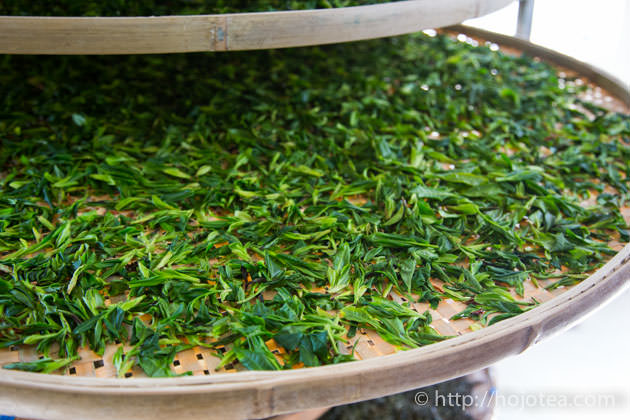
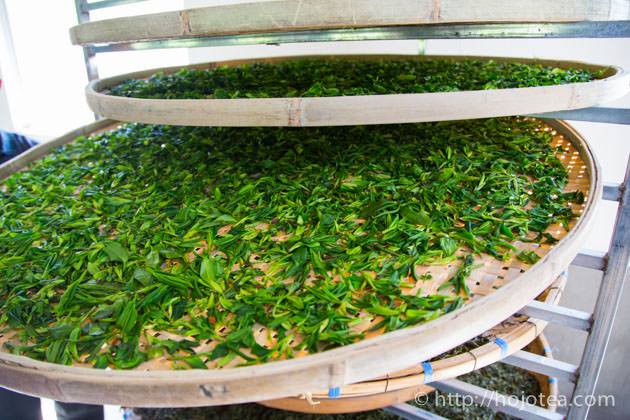
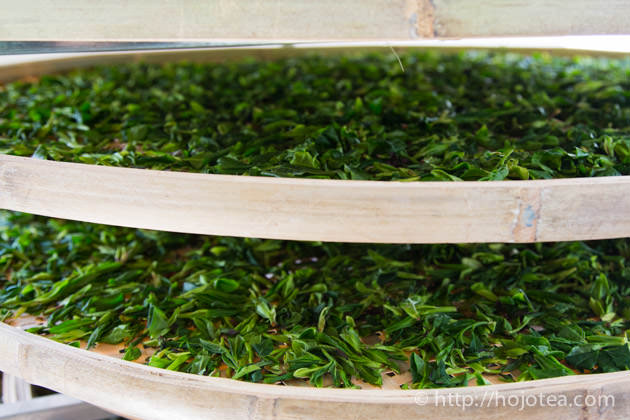
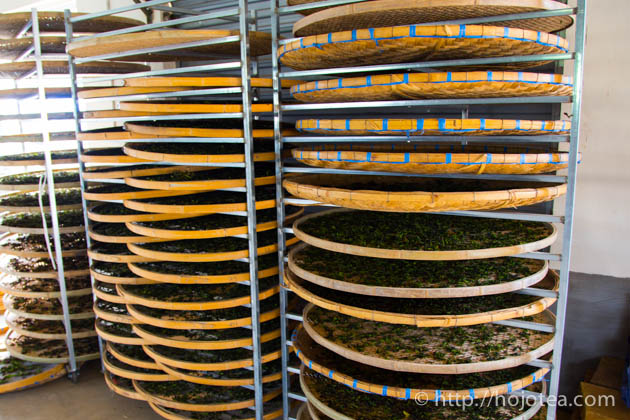
The withering process
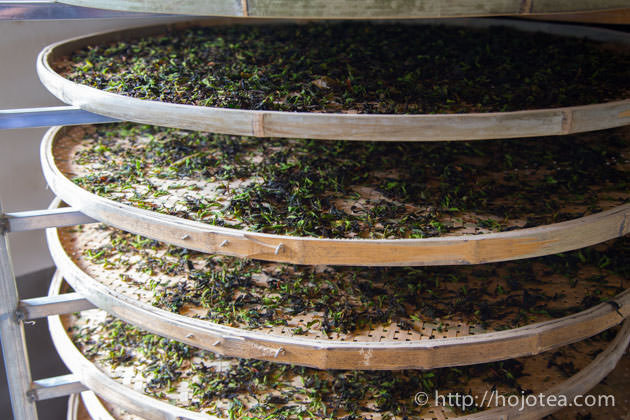
The leaves were picked around March 20, spread on bamboo trays in a shaded, moderately ventilated spot, and withered for two days. Withering gradually reduces the moisture in the leaf, and the resulting dehydration stress causes catechins and other compounds to ferment enzymatically. Tea that has been withered well has a sweet, floral aroma. If there is too much airflow during withering, the leaves dry out before they can ferment and the tea ends up with a strong grassy, green smell. Conversely, if there is too little airflow, or if it rains for days and humidity is too high, the stems over-ferment and develop a black-tea-like aroma. This tea was made at a facility nearly 2,000m above sea level. Thanks to the low humidity typical of high mountain climates, we controlled the degree of withering indoors by restricting the airflow.
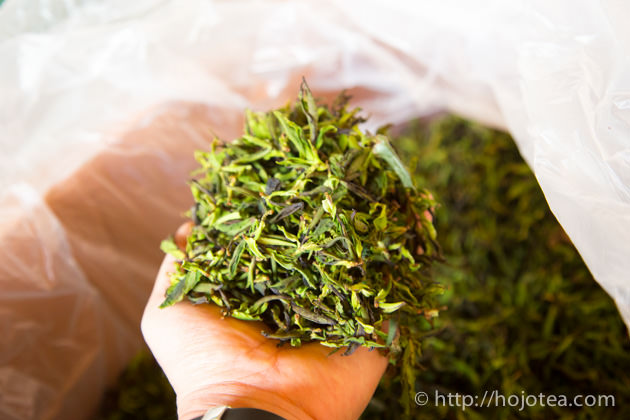
Appearance of the loose-leaf version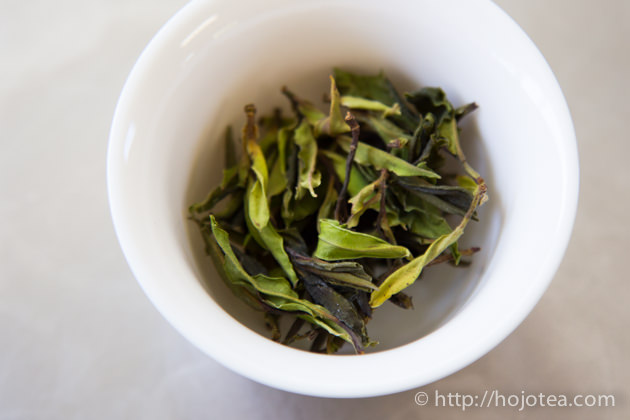
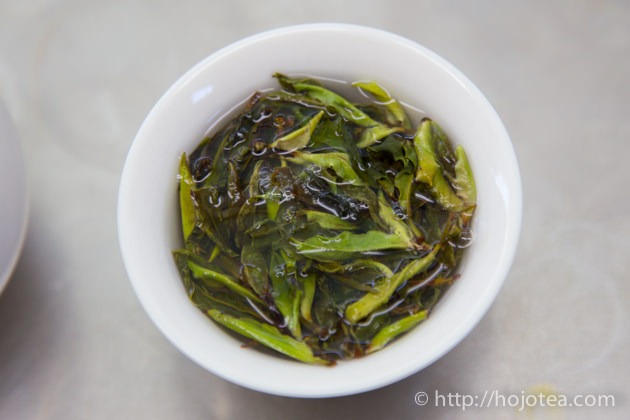
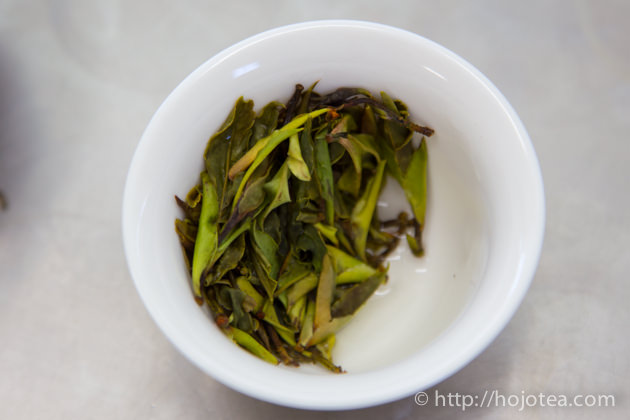
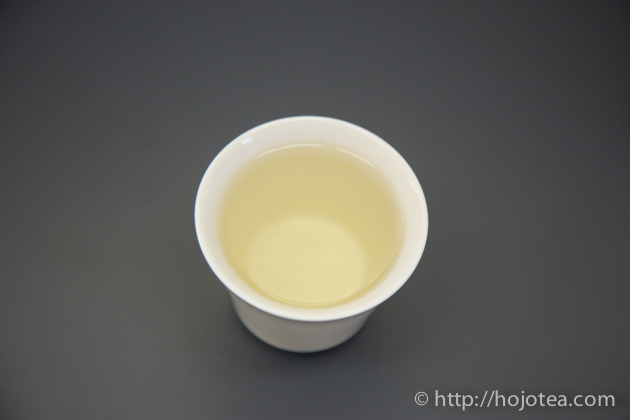
The tea turned out extremely aromatic: a powerful fragrance that calls to mind flowers, fruit, wild mountain herbs, and young tree bark. If you drank it without seeing the leaves, I would not be surprised if you mistook it for a flavored tea. And being a wild tea, it naturally has a very strong finish and a full, rounded body; even drinking it casually you feel a floating, relaxed sensation, and some people experience a mild "tea drunkenness."

Above and below: the raw mao cha used for the tea cake

The raw mao cha

Daxueshan Wild White Tea cake

Daxueshan Wild White Tea, loose-leaf version (pre-order only)
How to Brew
Water
For convenience, we recommend tap water. If you use tap water, boil it for 3 to 5 minutes to remove the chlorine used for disinfection. Even boiling, however, cannot remove chlorine completely. Wherever possible, use a water filter with an activated carbon cartridge to remove the chlorine. Otherwise the chlorine reacts with the tea's aromatic compounds and you will not be able to enjoy its true fragrance. Chlorine is added to kill microorganisms, and it kills not only the harmful ones but also the beneficial bacteria living in our gut. Various harmful effects at the cellular level have also been reported, and it can be a cause of allergies.
Distilled water and reverse-osmosis water contain no minerals at all, so the tea tends to taste flat. Please use mineral-containing water such as tap water wherever possible.
Also, never remove the limescale that builds up inside your kettle. Cleaning it with citric acid or the like will mean you can no longer get the taste of tea you are used to.
Once you have settled on a type of water, keep using that same type and do not switch. If the water changes, large amounts of minerals leach out of the scale, and after a while the tea will taste dramatically worse. Sticking with the same water is the secret to brewing delicious tea.
Brewing for the best flavor
Standard method
Amount of leaf: 3-4g per 200ml
Water temperature: boiling
Steeping time
1st infusion: about 30-40 seconds
2nd infusion onward: within 10 seconds
With this method you can brew 6 or more infusions in total.
Gongfu method
To bring out the best in this tea, do try the gongfu method. Gongfu brewing developed in Chaozhou as a way of getting the most out of Phoenix Dancong oolong.
Amount of leaf: 5-7g per 100ml
Water temperature: 100°C
Rinse the leaves twice with boiling water. The purpose is to raise the temperature of the leaves. Complete each rinse quickly, within 1-2 seconds.
Keep both the 1st infusion and all subsequent infusions to a few seconds. The 1st infusion will be on the light side, but from the 2nd infusion on the strength will be just right.
A surprisingly delicious alternative
White tea can also be brewed with cold water. Use mineral water or filtered water. Pour 200ml of water over 3g of leaves and leave for 20 to 30 minutes. The aroma and flavor are drawn out of the white tea gradually, letting you enjoy its taste and fragrance in their most natural state. Cold-brewed tea shows less color than hot-brewed, but when you actually drink it you will find the flavor rich and full.
Storing the tea
We recommend storing at room temperature.
Tea is sensitive to humidity; the moment it absorbs even a little moisture, it begins to deteriorate.
Please be aware that moisture can be absorbed unintentionally in situations such as the following.
- The tea is left near the kettle while brewing and is touched by steam
- Moisture on a spoon or scoop
- Opening the package on a humid day or in a humid place
- Opening the package immediately after taking it out of the refrigerator, causing condensation
- Taking it out of the refrigerator and leaving it unopened to return to room temperature, but the seal was imperfect and condensation formed
In practice, the most common causes of deterioration seem to be 4 and 5.
When tea is kept in the refrigerator, the inside of the bag is cold, and even if it is sealed tightly with tape, outside air quite often gets in and causes condensation. Once the leaves have been exposed to condensation, the aroma changes dramatically within 2-3 days.
As far as possible, store at room temperature, sealing the package in a properly dry room to keep humidity out. Ideally, consume within a few months of opening.
Unopened, vacuum-packed products can be stored for a year or more. If you wish to age the tea further, keep it unopened (still vacuum-packed) at room temperature. If you prefer to preserve the quality exactly as it was when purchased, store it in the refrigerator. If you do refrigerate it, always allow 24 hours for it to return to room temperature before opening. You might think half a day is enough, but tea leaves have a very large surface area and are, without exaggeration, a natural insulator. To the touch it may feel as though it has already reached room temperature, but the inside is still cold, and it takes a full 24 hours to warm through. Once it has come out of the refrigerator and been opened, store it at room temperature. From autumn through spring the ambient temperature is low, so it will keep well at room temperature for several months or more.
Choose options