

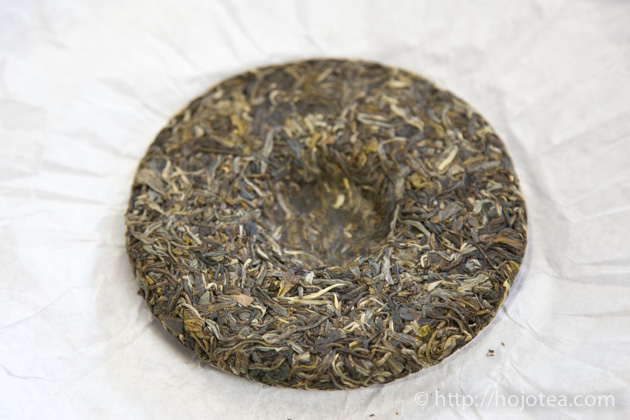
Dongshan Raw Pu-erh (Sheng) 200g
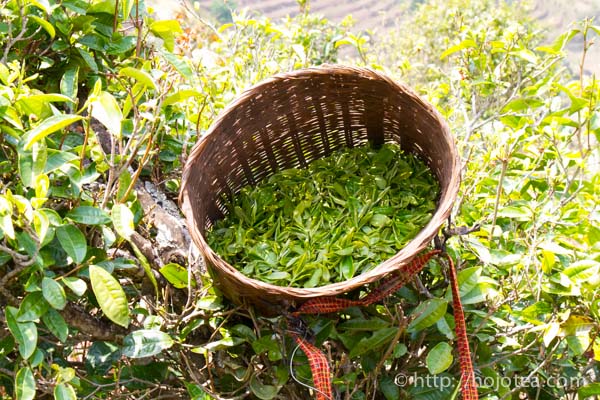
Dongshan Raw Pu-erh is a naturally grown tea made solely from the first flush, harvested in April at an altitude of around 2,100 m in western Lincang, an area relatively close to Myanmar.
Its defining characteristic is a fruity aroma reminiscent of grapes. Being a pu-erh, it naturally does not have the strong fruit aroma of an oolong, but it has a natural sweet fragrance.
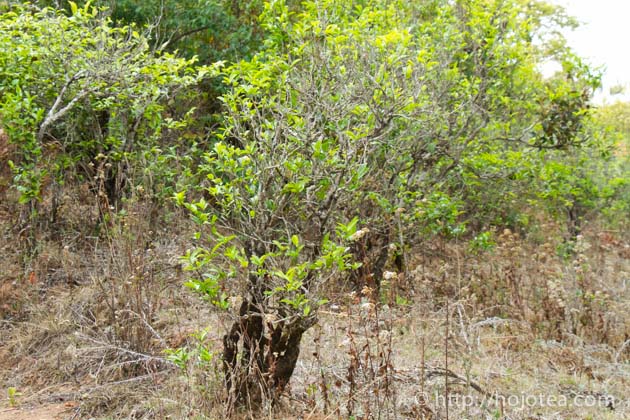
The distinctive aroma unique to younger tea trees
With pu-erh, the older the tree, the weaker the aroma tends to be. The aroma becomes more neutral and the tea's individuality fades, but in exchange the aftertaste and body grow stronger, and a sweetness felt in the throat lingers on and on.
Conversely, tea from trees that are not so old has a distinctive floral or fruity aroma, perhaps because of the particular compounds it contains.
Dongshan Raw Pu-erh is made from leaves harvested from trees around 100 years old, and it is a tea with a clearly perceptible character in its aroma as well.
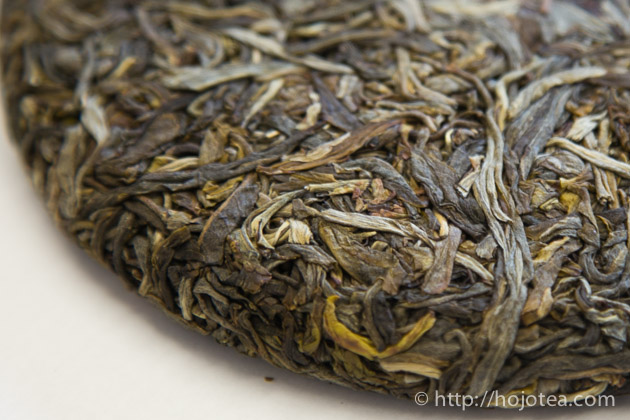
Skilfully processed, with a strikingly clear aroma
Another point worth noting about Dongshan Raw Pu-erh is that it is extremely well processed. By processing, I mean this: for raw pu-erh, the most important step is the kill-green (pan-firing) stage. How this step is managed changes the aroma of the tea enormously.
Pan-firing deactivates the enzymes by applying heat to the leaves. It is easy to assume the heat of the pan itself deactivates the enzymes, but in fact heating the leaves generates steam, and it is the heat of that steam that deactivates the enzymes.
For this reason, pan-firing requires a reasonably large batch of leaves so that the steam does not escape, and a large pan suited to that quantity is essential. Unfortunately, most ethnic-minority farmers do not own a large pan.
Tea made by the minority farmers themselves is processed in a pan only slightly larger than an ordinary household wok, so a large quantity of leaves cannot be handled. As a result, only a small amount of leaf is fired at a time, the steam escapes, and the kill-green cannot be carried out sufficiently.
To deal with this problem, farmers generally use a high flame, but then the leaves scorch easily and the tea takes on a roasted, smoky note.
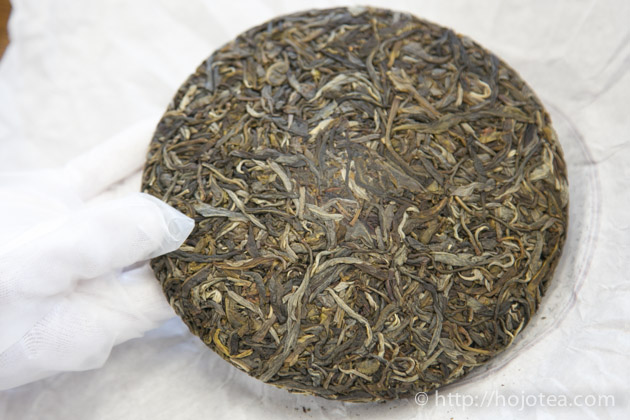
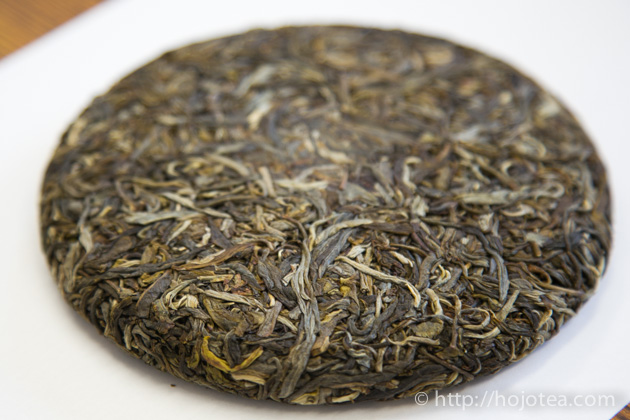
Dongshan Raw Pu-erh is made by a producer with fully satisfactory equipment. Because it is processed in a large, thick pan, there is no trace of scorching, and the aroma inherent in the leaf is brought out to the fullest. Moreover, the factory where Dongshan Raw Pu-erh is made sits in the middle of an ethnic-minority village and collects and processes naturally grown tea, so quality of raw material and processing skill go hand in hand.
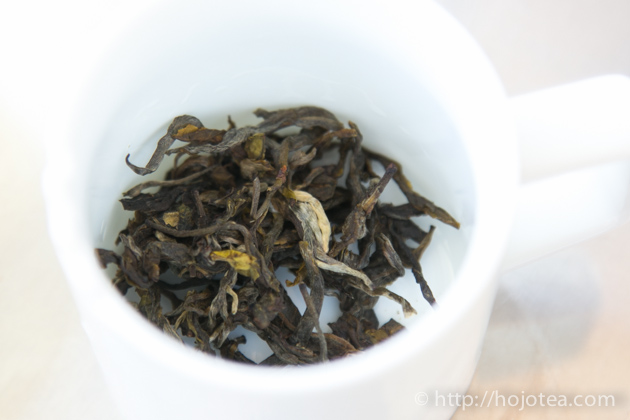
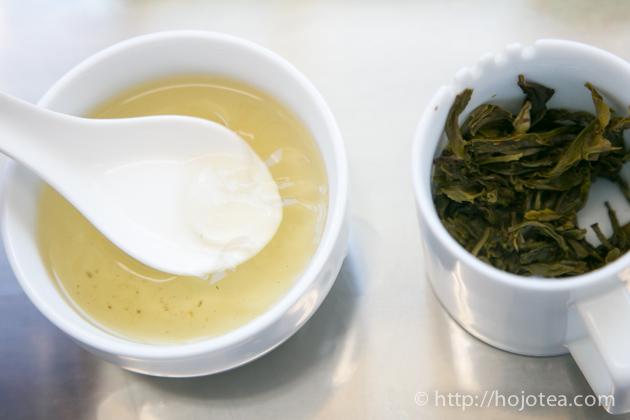
I love the aroma of Dongshan Raw Pu-erh as a fresh tea, but I also recommend the honey-like aroma that forms after a few years of ageing. In its fresh state, its transparent aroma is almost like a white tea. Being naturally grown it has a fairly deep body, and with its medium weight it is an easy tea to drink.
Sourcing focused on naturally grown tea
To me, the real pleasure of drinking pu-erh is being able to enjoy the extraordinarily rich flavor unique to naturally grown tea at a low price. Indeed, if you sought an oolong, green tea or black tea of the same level, the price would be unimaginably high. However, not all pu-erh made in Yunnan meets these conditions. In fact, in more than 90% of Yunnan's pu-erh producing areas, by my own estimate more than 99%, road development has brought tourists, and cultivation has shifted from the traditional natural methods practiced for thousands of years to modern farming with fertilizers and pesticides. Once that happens the tea loses its deep body, and the price rises needlessly. In search of rich-tasting, naturally grown tea, we spend a month every year deep in the mountains of Yunnan sourcing tea. To obtain high-quality tea, we have to travel to ever more remote places deep in the mountains.
Why do enthusiasts become so devoted to pu-erh?
When explaining to customers, I say: oolong for aroma, pu-erh for taste. It sounds a bit like talking about mushrooms! (laughs)
For aroma, I think no tea beats a high-quality oolong. A well-aged pu-erh has a wonderful aroma too, but the strength of pu-erh is definitely its taste.
Pu-erh made in the traditional way by ethnic minorities deep in Yunnan, without fertilizer or pesticides, has a very soft, full-bodied taste.
Especially with tea from trees grown entirely naturally, as slowly as wild trees, the sweetness and mellowness are beyond words.
If you sought an oolong of the same quality level, it would cost as much as a competition prize-winning tea and deal a fatal blow to your wallet.
Because pu-erh is made in remote places deep in the mountains, far from any town, raw material of unbelievable quality can be obtained at unbelievable prices.
The key to enjoying pu-erh, then, is its rich flavor, its full sweetness and the soft texture of the liquor as it passes down the throat.
Furthermore, when pu-erh is aged well, it develops a sweet, honey-like aroma. To develop that sweet aroma, it must be aged in the proper way.
The ageing method is explained in detail under "Storage." Normally you can enjoy the aged aroma from three to four years after storage begins, and it reaches its ideal at five to ten years. The ideal aroma is fruity and honey-like, one that ordinary people find delicious.
Beyond ten years the tea passes its peak and tends to lose its character. I have drunk many pu-erhs that are decades old, and they merely smell of earth and are not very pleasant.
The idea that the longer you keep it, the better it gets is nothing more than a myth created by tea merchants in Guangdong and Taiwan who treat pu-erh as a speculative commodity. Every food has its moment when it is best eaten or drunk.
How to Brew
Water
We recommend tap water, as it is readily available. If you use tap water, boil it for 3 to 5 minutes to remove the chlorine used for disinfection. Even boiling, however, cannot remove chlorine completely. Wherever possible, use a water purifier with an activated-carbon filter to remove the chlorine. Otherwise the aroma compounds in the tea react with the chlorine and you cannot enjoy its true fragrance. Chlorine is added to kill microorganisms, but it kills not only harmful ones but also the beneficial bacteria living in our gut. Various harmful effects at the cellular level have also been reported, and it can be a cause of allergies.
Distilled water and reverse-osmosis water contain no minerals at all, so the tea tends to taste flat. Use mineral-containing water such as tap water wherever possible.
Also, never remove the limescale that builds up inside your kettle. Cleaning it with citric acid or the like will change the taste of your tea from what it used to be.
Once you have settled on a type of water, keep using the same type and do not switch. If the type of water changes, large amounts of minerals leach out of the scale, and after a while the tea will taste dramatically worse. Sticking to the same water is the secret to brewing delicious tea.
Choose options