
Baiyingshan Ancient Tree White Tea 200g
A short ageing brings an aroma like Darjeeling First Flush
I had decided last year that I wanted to source white tea from Baiyingshan this year. I obtained a trial batch the producer made last year and let it rest for a year, and it matured into a fragrance as brilliant as a Darjeeling First Flush. Moreover, because it is made entirely from naturally grown tea, it has a depth of aftertaste on a level no Darjeeling can match, and I was moved by its deep, layered aroma. 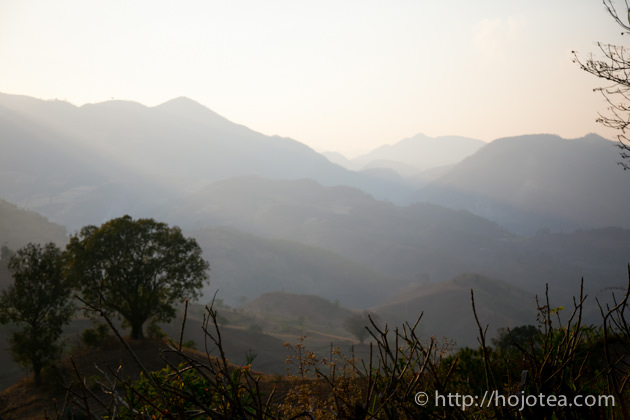
A deep, lingering aftertaste from naturally grown tea
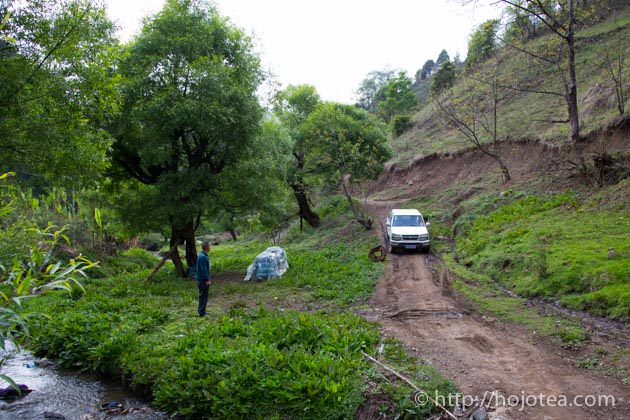
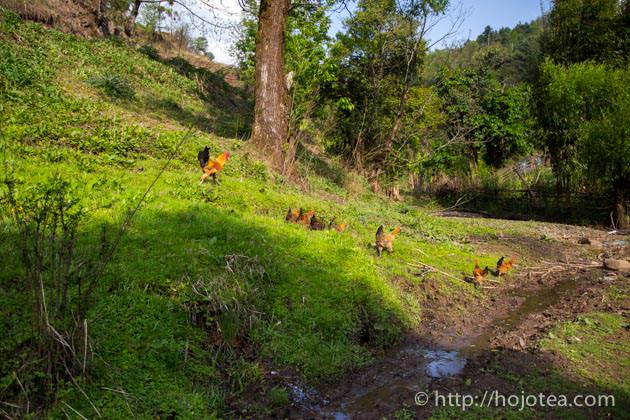
Baiyingshan lies in Yunxian, Lincang. It is a very famous producing area around Lincang, and in recent years you even see Baiyingshan billboards at the airport. However, not every tea from Baiyingshan shows the same quality profile. The area covered by the name is quite large, and most gardens use fertilizer, which affects the quality of the tea. I am strict about sourcing only from unfertilized gardens, and the strength of the aftertaste is one of my criteria for selecting tea. The Baiyingshan Ancient Tree White Tea introduced here is made without fertilizer or pesticides, from ancient trees with an average age of over 100 years. Its defining characteristic is an intensely deep aftertaste; when you drink it, you feel a deep body that seems to soak into the back of the throat. The aroma is well integrated, and in contrast to our Ma'anshan Ancient Tree White Tea, the body is on the lighter side. A lighter-bodied tea is well suited to everyday drinking, and combined with its strong aftertaste, I think it is a tea you could drink all day without tiring of it. With its floral and sweet notes, I expect it will also appeal to lovers of black tea and oolong.
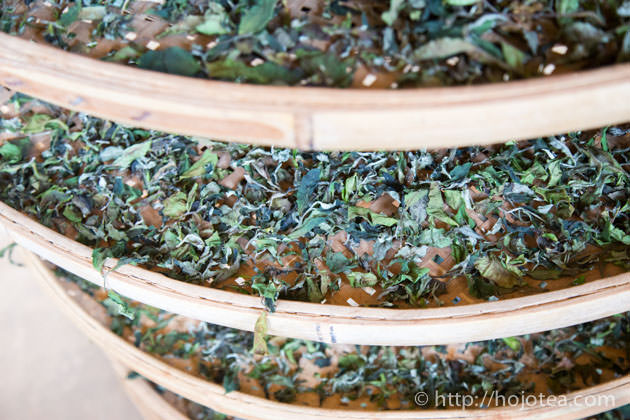
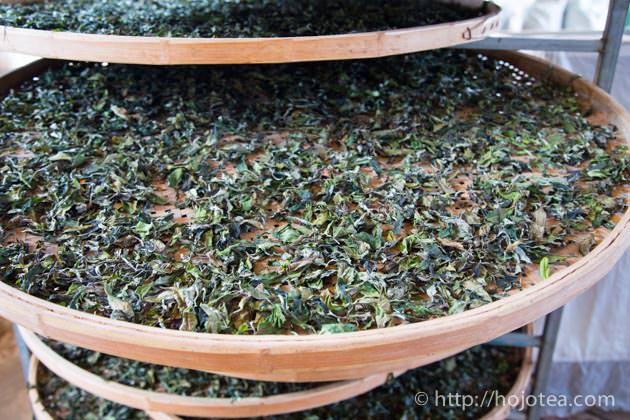
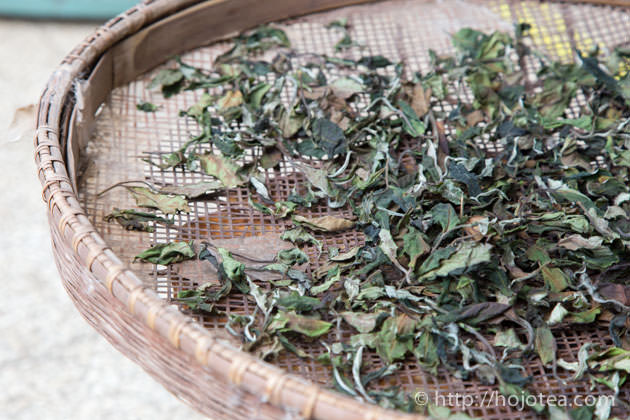
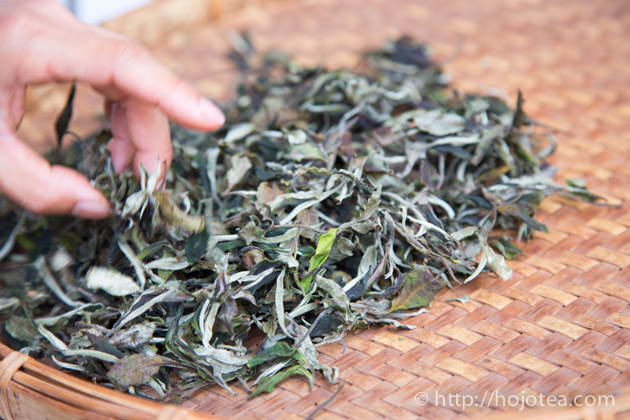
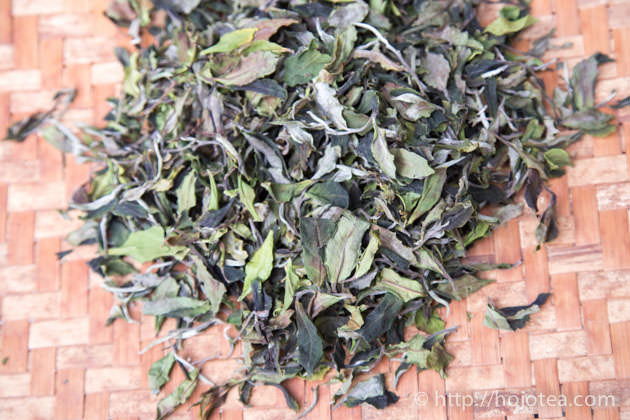
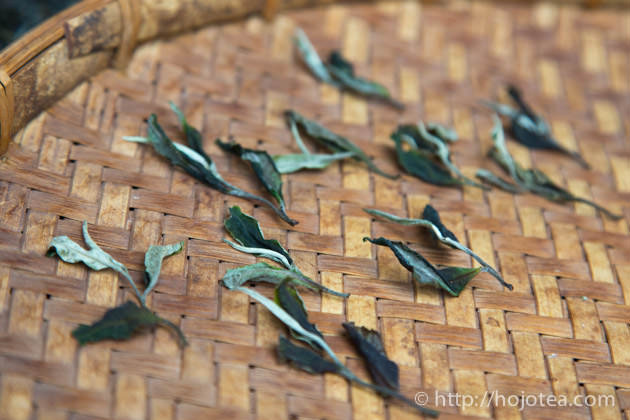
Custom-produced to bring out a floral aroma
For this Baiyingshan Ancient Tree White Tea, I discussed my desired production parameters with the producer in advance and had it made to order to my specifications. In particular, I emphasized a floral aroma by keeping the withering time on the short side. Withering was therefore carried out for about two days, and the leaves were dried and finished while their color was still green. When I checked it as maocha (rough tea), it had a very fresh, floral fragrance with a faint sweetness like honey. When I purchased the maocha, I agonized over whether to sell it loose or to compress it. Because the leaf has a very low bulk density and takes up a great deal of space, and because the risk of breakage in transit is high, I decided to process it into cake form, which also makes it easier to age. 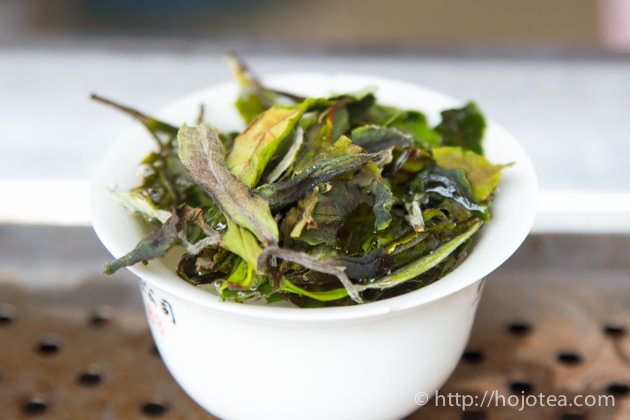
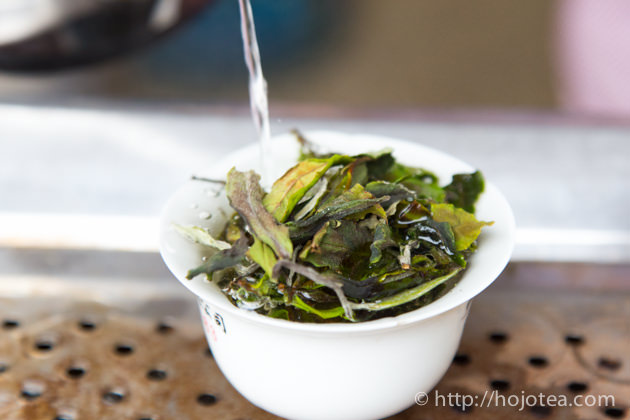
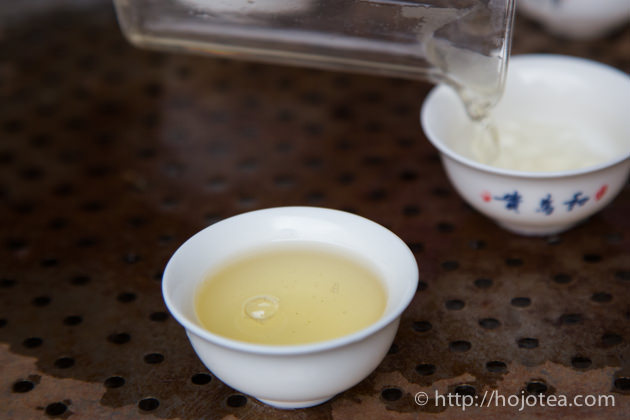
A muscat-like aroma after a few years of ageing
Another fascinating feature of this tea is how it changes with age. White tea changes in aroma with ageing even more than pu-erh. The liquor, a pale cream color in the first year, turns yellow to orange after one or two years, and with long ageing it becomes as dark as black tea. The aroma changes greatly along with it: from an initial floral fragrance like Darjeeling First Flush, sweet notes of honey and apricot gradually develop, and as the liquor darkens it turns into a rich muscat aroma. Pu-erh also develops sweet aromas with age, but white tea lets you enjoy the "change" over a shorter period, which is why it is quietly becoming a trend both in China and among HOJO's customers. If you intend to store it, keep it unopened to maintain an oxygen-free state. Ageing proceeds faster in places with a higher average annual temperature; in fact, tea stored in our Malaysian warehouse ages more than twice as fast as in Japan.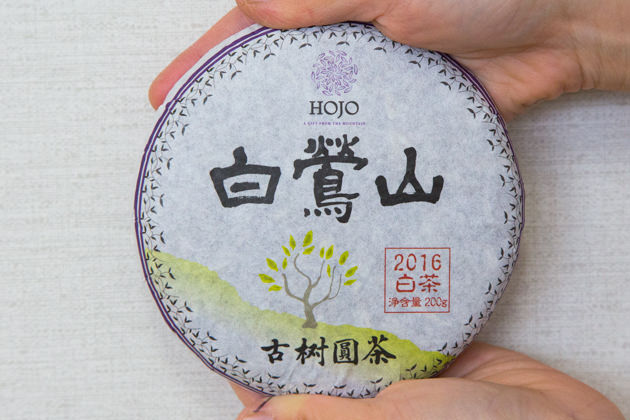
How to Brew
Water
We recommend tap water, as it is readily available. If you use tap water, boil it for 3 to 5 minutes to remove the chlorine used for disinfection. Even boiling, however, cannot remove chlorine completely. Wherever possible, use a water purifier with an activated-carbon filter to remove the chlorine. Otherwise the aroma compounds in the tea react with the chlorine and you cannot enjoy its true fragrance. Chlorine is added to kill microorganisms, but it kills not only harmful ones but also the beneficial bacteria living in our gut. Various harmful effects at the cellular level have also been reported, and it can be a cause of allergies.
Distilled water and reverse-osmosis water contain no minerals at all, so the tea tends to taste flat. Use mineral-containing water such as tap water wherever possible.
Also, never remove the limescale that builds up inside your kettle. Cleaning it with citric acid or the like will change the taste of your tea from what it used to be.
Once you have settled on a type of water, keep using the same type and do not switch. If the type of water changes, large amounts of minerals leach out of the scale, and after a while the tea will taste dramatically worse. Sticking to the same water is the secret to brewing delicious tea.
How to Brew
Standard method
Amount of leaf: 3-4 g per 200 ml
Water temperature: boiling water
Steeping time
1st infusion: about 30-40 seconds
2nd infusion onward: within 10 seconds
With this method you can brew six or more infusions in total.
Gongfu method
To bring out the best in this tea, do try brewing it gongfu style. The gongfu method was developed in Chaozhou to brew Phoenix Dancong oolong at its best.
Amount of leaf: 5-7 g per 100 ml
Water temperature: 100°C
Rinse the leaves twice with boiling water. The purpose is to raise the temperature of the leaves. Each rinse should be completed quickly, within 1-2 seconds.
Keep both the first infusion and all subsequent infusions to a few seconds. The first infusion is on the light side, but from the second infusion onward the strength is just right.
A surprisingly delicious way to brew
White tea can also be brewed with cold water. Use mineral water or water passed through a purifier. Pour 200 ml of water over 3 g of leaf and leave it for 20-30 minutes. The aroma and flavor are extracted gradually from the white tea, letting you enjoy its taste and fragrance in their natural state. Cold-brewed tea shows less color than hot-brewed, but when you drink it you will find a rich flavor.
How to store tea
We recommend storing at room temperature.
Tea is vulnerable to humidity, and the moment it absorbs even a little moisture it begins to deteriorate.
Please be aware that moisture can be absorbed unintentionally in situations such as the following.
- The tea is placed nearby while brewing and is touched by steam
- Moisture is present on a spoon or other utensil
- The package is opened on a humid day or in a humid place
- Condensation forms because the package is opened immediately after being taken out of the refrigerator
- The package is taken out of the refrigerator and left unopened to return to room temperature, but the seal is imperfect and condensation forms
In practice, the main causes of tea deterioration appear to be 4 and 5.
When stored in a refrigerator, the inside of the bag is cold, and even if it is sealed tightly with tape, outside air very often gets in and causes condensation. Once the leaves have been exposed to condensation, the aroma changes dramatically within 2-3 days.
As far as possible, store at room temperature, and seal the package in a thoroughly dry room to keep humidity out. Ideally, consume within a few months of opening.
Unopened, vacuum-packed products can be stored for a year or more. If you wish to age the tea further, keep it unopened (still vacuum-packed) at room temperature. If you prefer to preserve the quality exactly as it was at purchase, store it in the refrigerator. If stored in the refrigerator, always allow a full 24 hours for it to return to room temperature before opening. Half a day may seem enough, but tea leaves have an enormous surface area and are practically a natural insulator. To the touch they may already feel at room temperature, but the inside is still cold, and it takes 24 hours to warm through completely. Once the tea has been taken out of the refrigerator and opened, store it at room temperature. From autumn to spring, when outdoor temperatures are low, it will stay delicious for several months or more at room temperature.
Storage containers that can create a vacuum are available commercially. They are not everyday items, but they are ideal for storing tea, so you may wish to look for one of these special containers.
Choose options