
Keemun black tea 70g
Who was Keemun Xiang, who once captivated the British royal family?
Keemun black tea is a black tea originating from China and known as one of the world's three great black teas (the others being Sri Lankan UVA and Darjeeling).
Keemun is a traditional Chinese black tea that has enjoyed immense popularity overseas in the past, with many fans in the UK in particular, and is even used by the British Royal Family.
Currently, Keemun black tea is so widely distributed in China that it is handled by any retailer, but at HOJO, we are committed to the "original place of origin" and "original variety" in order to accurately reproduce the quality of the "luxury Keemun tea" that captivated the British court.
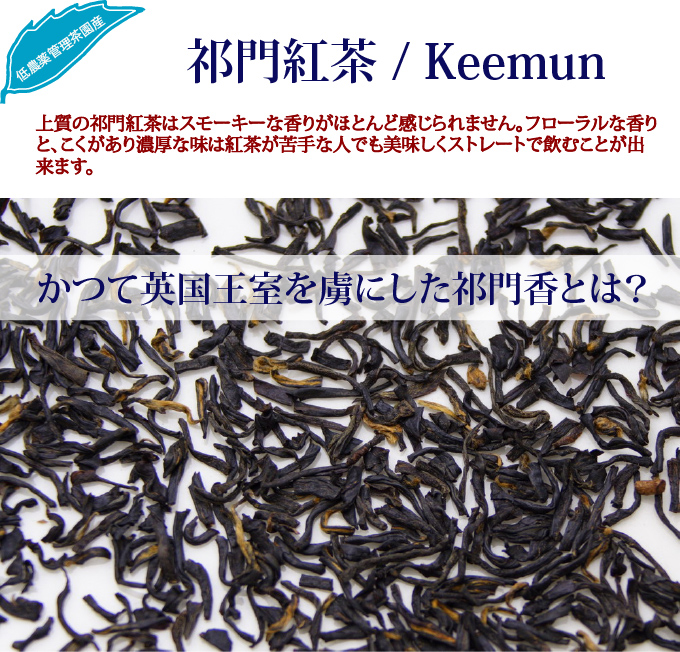
High-quality Keemun black tea does not have a smoky aroma. The tea leaves are very delicate and fine, with a floral aroma and a rich, full-bodied flavor that even people who don't like black tea can enjoy drinking straight.
Product Details

Keemun is a black tea originating from China and known as one of the world's three great black teas (the others being Sri Lankan UVA and Darjeeling).
This black tea has been produced in Qimen County, Anhui Province since the Qing Dynasty. It is said that Keemun black tea was developed based on black tea from Fujian Province, which was probably Lapsang Souchong.
In the past, Keemun tea has been extremely popular overseas, especially in the UK, where there are many Keemun fans.
The tea leaves are very delicate and fine, with a sweet aroma and a faint floral scent, and are characterized by a sweet and mellow taste.
Between 1939 and 1940, Keemun commanded the highest prices on the American market. At the time, it was not a tea available to everyone, but a luxury only afforded to the wealthy upper classes.
President Roosevelt and his First Lady were especially known to be fans of Keemun tea. They were said to have loved Keemun tea so much that they drank it every day.
In addition, this tea was sent as a gift to Queen Victoria of England on her birthday, and was much loved by the Queen, who was known to be a gourmet.
Today, Keemun tea is sold by any dealer within China.
However, at HOJO, in order to accurately reproduce the quality of the "premium Keemun tea" that captivated even the British court, we are committed to the "original place of origin" and "original variety."
We only deliver tea produced from the authentic "Li Yi" variety, grown in the Qimen region within the Nature Conservation Park in Anhui Province.
Keemun black tea producing area
The tea plantations are scattered across forested mountainous regions, where the rainfall is sufficient for tea to grow, and the humidity and low temperatures are key factors in creating the rich flavor of high-quality black tea.
The true identity of this mellow flavor is an amino acid called theanine. Theanine is abundant in young buds, and when tea leaves absorb sunlight, it is synthesized into polyphenols such as catechins.
When the sunlight is blocked by the fog, the tea leaves are less able to convert theanine into polyphenols, resulting in a high content of theanine in the tea leaves. This is the secret behind Keemun's distinctive aroma and mellow flavor.
The History and Culture of Keemun Black Tea
Qimen was founded in 1875 in Qimen County, Anhui Province. During the early Qing Dynasty, Qimen County was famous for producing green tea. During the early Qing Dynasty, the processing of black tea was developed in Fujian Province.
As black tea became more popular in overseas markets, black tea production in Anhui flourished. At that time, tea merchants began to outsource black tea production to tea farmers due to the high profit margins on black tea.
The tea was mainly exported to the UK, but also to France, the USA and Germany. As far back as 1939-1940, Keemun was the most expensive tea in the New York wholesale market.
Keemun black tea has won many awards both internationally and domestically.
- 1913: Gold medal at the Expo in Italy
- 1915: Gold medal at the Panama International Exhibition
- 1987: Won the gold medal at the 26th Belgian World Premium Food Competition
- 1988: Won the Gold Award at the 1st China Food Expo
Quality assessment criteria for Keemun black tea
Tea leaves:
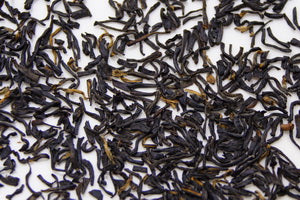
They are delicate, thin, firm and curved in shape. Low quality tea leaves are loose, thick and rough.
Tea leaf color:
It is deep black in colour and has a glossy finish. Lower quality tea leaves are greyish black in colour and have a dull surface.
Uniformity:
High quality tea leaves are made up of uniformly sized leaves. Lower quality tea leaves are made up of large, flat, loose leaves.
Foreign bodies, etc.:
Well-processed tea is free of foreign matter such as fibers, bamboo, wood chips, sand, stones, etc. Stems are unavoidable in summer-picked tea leaves, but are kept to a minimum, about 2-3% per gram.
scent:
The dried leaves have a slightly smoky aroma and a sweet, sugary scent. The brewed tea has the same aroma. Quality Keemun leaves retain their aroma even after the tea has been drunk.
light blue:
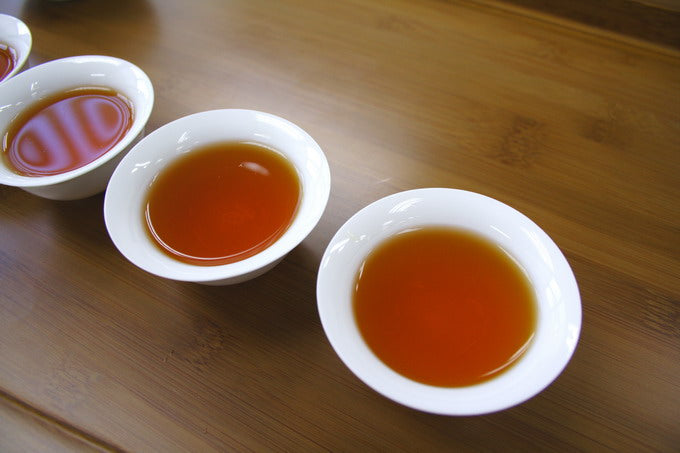
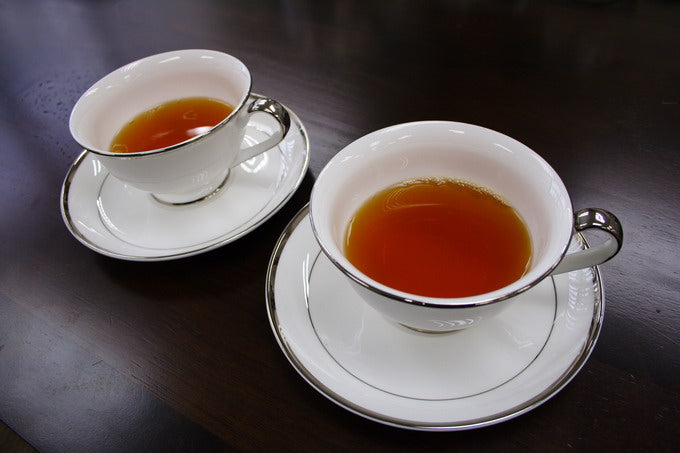
A shiny, light reddish brown color, a high-quality Keemun has a golden ring around the rim of the cup. The golden ring indicates that the tea contains a lot of a pigment called theaflavin, and black tea rich in this ingredient has a rich, rounded flavor.
taste:
It is smooth and rich, with a sweet taste that lingers in your mouth. Furthermore, the moment you put the tea in your mouth, you can feel a very refreshing aroma that wafts through your nose.
Used Tea Leaves:
The tea leaves are a uniform light brown in color. The color is uniform throughout the tea leaves. When you touch the leaves with your fingers, they feel thick, soft, and elastic.
Choose options