
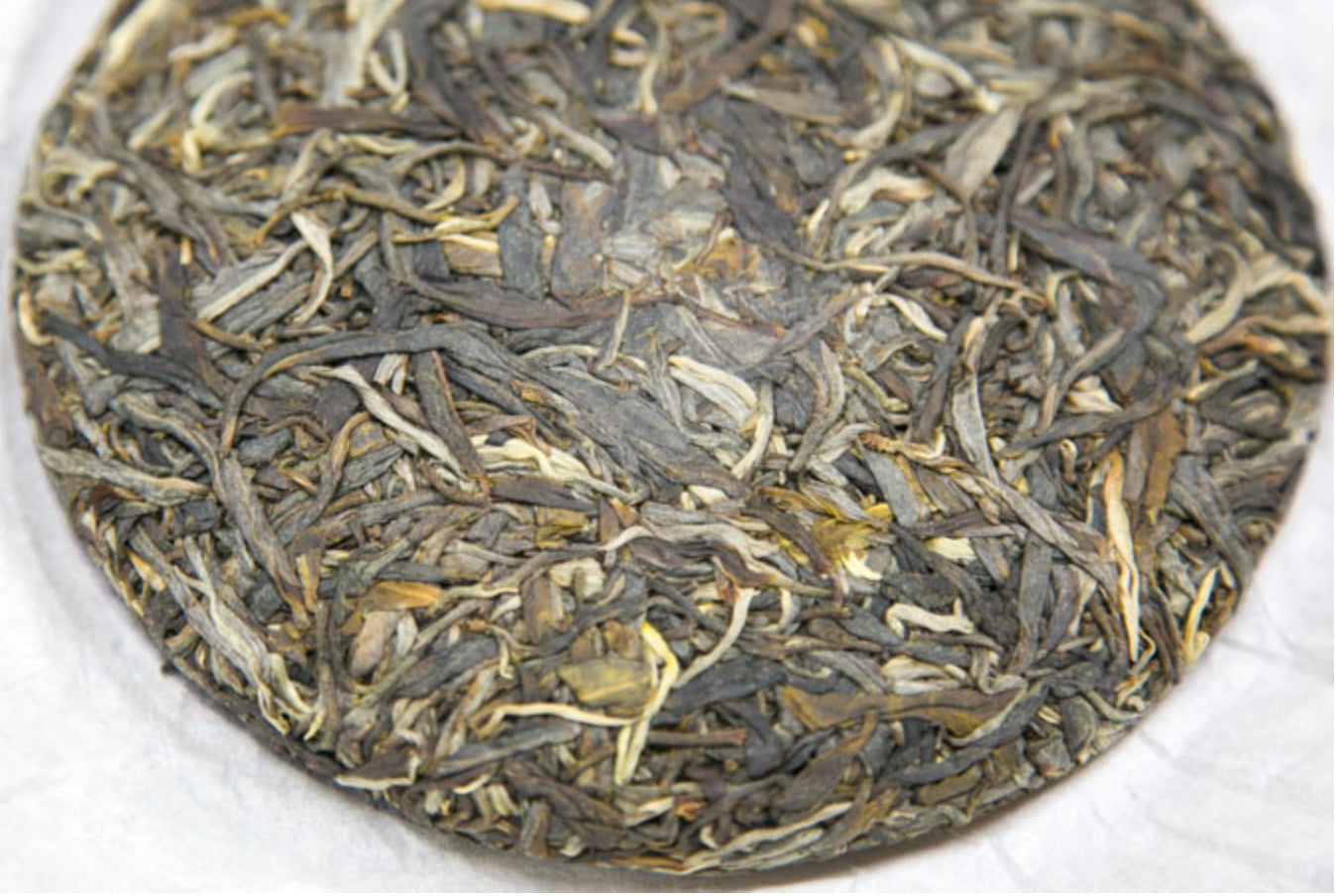
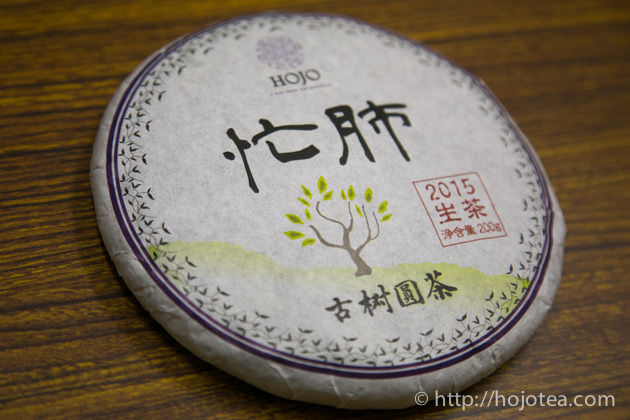
Busan Old Tree Tea 2015 200g
This is raw Pu-erh tea produced in Ibi, a famous tea producing area representing Lincang. It is characterized by its thick body and rich flavor.
This product is sourced from old trees that are over 100 years old, and has a very rich, full-bodied flavor, with a similar character to teas from southern Yunnan, such as Bulangshan and Laobanzhang.
You can enjoy the rich flavor that comes from naturally grown old trees.
Pu-erh raw tea is a delicate tea with a fruity taste, like freshly made white wine. It has no bitterness or astringency, so children also love it.
When you think of Pu-erh tea, many people may imagine a tea that is brown in color and smells like dried mushrooms or dried fruit, but that is a type of tea called ripe Pu-erh tea.
About the body
"Body" is a Japanese word that means fullness, a sense of width, weight, and richness of flavor. When you put a strong-bodied tea in your mouth, you can feel the full-bodied aroma and rich sweetness.

Product Details

Characteristics of Lincang Tea
The most famous Pu'er tea producing areas are in southern Yunnan Province, including Laobanzhang, Wuyi, and Bulangshan, and Sishuangbanna, which borders Laos.
However, because southern Yunnan has long been popular with Pu'er tea lovers, prices have skyrocketed, and as a result, most farmers have started using fertilizer, and the use of fully natural farming methods has become extremely rare.
In addition to Sishuangbanna, another famous production area is an area called Lincang.
Lincang is located in the southwest of Yunnan Province, and is located in the north in terms of latitude. Lincang has many high mountains such as Wuling Mountain, Ailao Mountain, and Dasyu Mountain, and most of the tea producing areas are located in areas above 1500m, with some tea plantations at 2400m.
In addition, compared to Sishuangbanna, Lincang is located at a higher latitude, meaning that there is a greater difference in temperature, creating an environment that is conducive to producing high-quality tea.

Naturally grown tea trees
Furthermore, Lincang is a very remote area and has not received as much attention as the southern part of the country. For this reason, there are still many fully organic tea plantations remaining on a village-by-village basis.
Lincang tea is of extremely high quality yet inexpensive, so in recent years I have been specializing in sourcing Lincang tea.
One of the four major production areas in Lincang

As shown in the photo, tea fields where the soil around the trees has been dug up are a warning sign. Even so, the soil in Busan has a beautiful color.
There are four famous tea producing areas in Lincang: Bingdao, Sigui, Maanshan and Baihui. Of course, there are other excellent quality teas in other areas as well.
However, these four tea producing areas are very well known in China, and the prices are higher than other tea producing areas. Among them, the tea I will introduce this time is tea made in a village called Baihai.
The name Bushu has a rather interesting ring to it not only in Japanese but also in Chinese (Mangfei), but the name of this mysterious village is derived from the language of the local ethnic minority.
There are many similar products to Busai tea even in the area where it is produced.
A river flows through the village of Baihai, and the tea produced in this river basin is known for being relatively strong-bodied.
In the lower reaches of the Bohai River there is a village called Mengban, and as the tea harvested in this village is also from the same river basin, it is characterized by a rich, full-bodied flavor.
However, in terms of body strength, the Bushu has a more distinct personality.
Tea from Fukuoka is becoming rare


Until a few years ago, Bushu produced very good tea.
However, in recent years, government officials have privately acquired the tea factory and at the same time lobbied a television station to produce and broadcast a special program about Busan.
As a result, the reputation of the tea has grown dramatically in recent years, and the price of tea has soared. In order to earn more money, farmers are increasingly turning to modern agricultural styles, such as increasing the amount of fertilizer they use and actively pruning the vines.
Nowadays, there are very few farmers who practice the traditional fertilizer-free cultivation, and it is becoming very difficult to secure good quality tea in this producing area.
On the other hand, the reputation of Guo Lang in China has been growing significantly year by year, and in recent years the name Guo Lang can be seen on many storefronts in tea markets not only in Kunming but also in Guangzhou.
However, since the area of Ikkai is very small, it is certain that much of the tea produced there is not actually made in Ikkai.


Characterized by a thick body

The defining feature of Bushui is its full body and rich flavor. The flavor is very full and powerful, and it has a personality somewhat similar to that of teas from southern Yunnan such as Bulangshan and Laobanzhang.
This year we purchased tea from trees that are over 100 years old. The old trees are naturally cultivated, giving the tea a rich flavor.
Purchasing specialized in naturally grown tea

We have been visiting Yunnan Province every spring since 2010. Through our many years of staying there, we have built many connections with famous tea-producing areas. However, what we value is not the fame of the producing area, but tea with a clear taste and a long aftertaste. For this reason, we focus on remote mountain villages, select tea plantations with old trees and fertilizer-free tea at high altitudes, and purchase them through our own distribution route. For more information, please see the following page.
In Yunnan, thousands of producers produce tea that uses ingredients from other regions but is advertised as being from a famous region, and it is available everywhere, including airports, convenience stores, and supermarkets.
However, what complicates the situation is the reverse phenomenon that counterfeit tea made from tea from remote areas is of higher quality than the real thing. This is particularly common with Pu-erh tea from Lincang, and is well known among local purchasing professionals. For more information, please see the following page.
Yunnan has long-established brands such as Dayi and Zhongcha, which are famous because their teas produced before 1990 are highly regarded.
So what makes these ancient teas so special? Many people assume it was because of the long aging process, but in fact the tea used back then was high-quality tea leaves that were grown naturally without fertilizer.
Therefore, even if the tea made today is aged for a long time, it will not have the same quality. For details, please see the following page.
Choose options