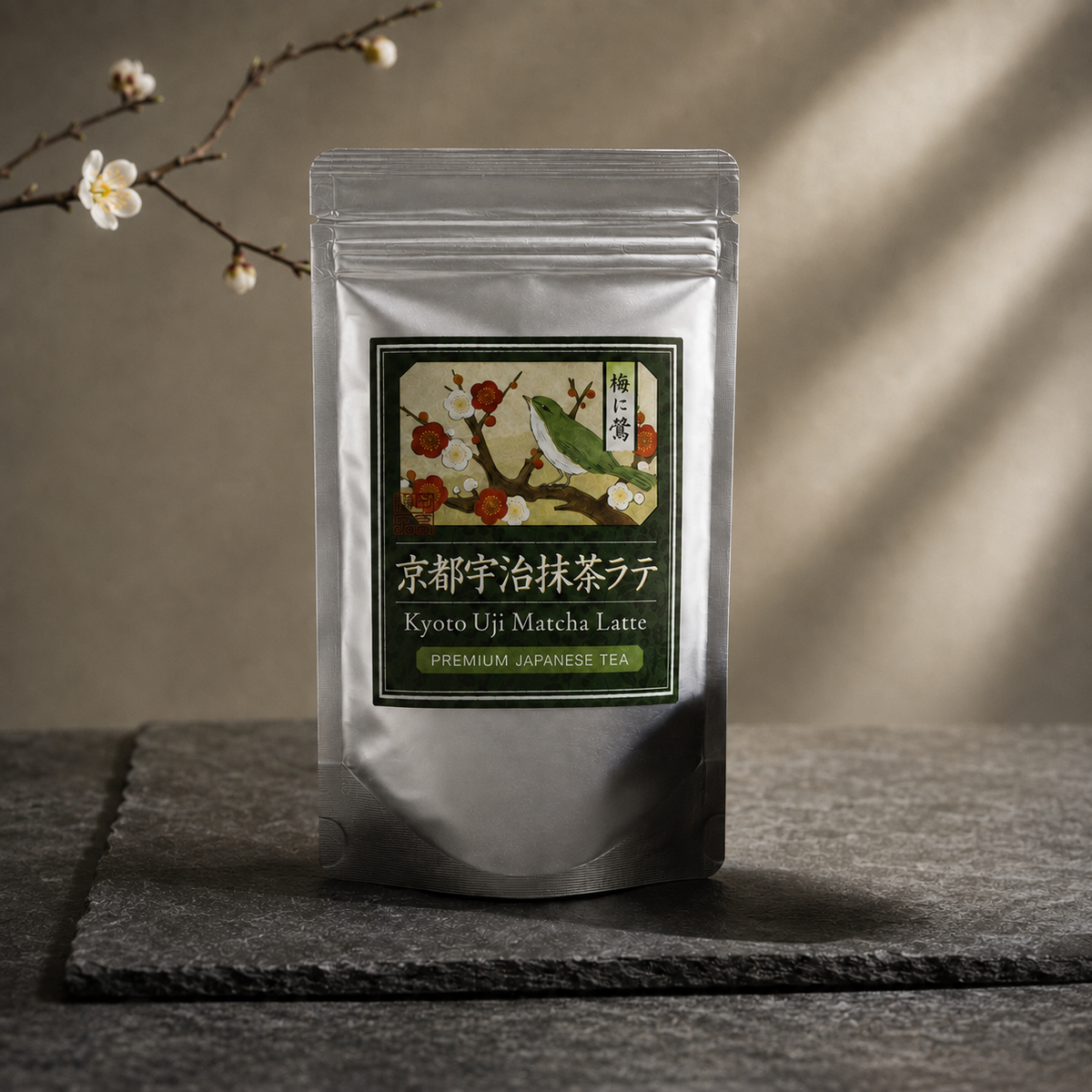
Kyoto Uji Matcha Latte "Ume ni Uguisu" 100g
Dissolves smoothly into cold milk, no chasen needed
The deep green and lifted aroma of matcha stay intact, while a restrained sweetness spreads gently across the palate.
Leaves grown under shade become matcha
The raw material for matcha is a leaf called tencha. Three weeks before harvest, the tea field is covered and the new shoots are raised with the sunlight blocked out. The picked shoots are steamed, then dried as they are, without rolling. Leaves that follow this path, diverging from Sencha, which is rolled to finish, become tencha.
The labor of shade-grown cultivation. The choice not to roll. Matcha's deep green and its aroma without sharp edges are born only at the end of this process.
"Ume ni Uguisu" uses tea from Uji, Kyoto, an area renowned for tencha. It is what is generally called ceremonial grade matcha. A matcha that would normally be savored at a tea gathering has been deliberately chosen here to be paired with milk.
Matching the particle size
In this matcha latte, the particle sizes of the matcha and the granulated sugar are carefully aligned.
When fineness varies, the two dissolve at different rates on contact with liquid. With their particle sizes matched, they disperse evenly even when added to cold milk. There is no need for a chasen (bamboo whisk); simply stirring with a spoon gives a smooth result.
On the palate, the first thing to rise is the fresh, green shade-grown aroma of the matcha. The sweetness is restrained and never blurs the outline of the tea. Behind the mellowness of the milk lingers the firm finish so characteristic of Uji tea.
The culinary-grade matcha common in "matcha lattes"
Products sold as matcha lattes are often said to be made with culinary-grade matcha. Culinary matcha is frequently made from later pickings such as the third or fourth flush, and in that case bitterness and astringency tend to come forward while the aroma becomes muted.
The range of raw materials is also wide: some products blend in powder made from the mature, hardened leaves of bancha or Sencha grown without shade. Because later-season leaves tend to yellow, there are also known examples of adding chlorella, a type of phytoplankton, to keep the green vivid and prevent fading under heat. In baked goods and other heated applications, this is a perfectly reasonable choice.
When it comes to choosing on taste and aroma, however, the difference in raw material and process shows directly in the cup. That is why "Ume ni Uguisu" pursues ceremonial grade.
How to Brew — just milk and a spoon
Use 5g of this product per 100ml of milk. The milk can be used straight from the fridge.
Put the matcha latte in a glass, pour in a small amount of milk first and work it into a paste, then add the rest for an even smoother result. The ratio is the same with warmed milk. These amounts are only a guide, so adjust the strength to your taste.
On price — the result of choosing not to lower the quality of the tea
Because it uses ceremonial grade matcha, the price is unavoidably higher than products made with culinary matcha. This is the consequence of deciding not to compromise on the raw material.
Seen per cup, though, the picture changes. One bag makes roughly 20 cups, which works out to about ¥230 per cup.
Adding nothing unnecessary
"Kyoto Uji Matcha Latte Ume ni Uguisu" is an original product of The Art of Tea.
The ingredients are ceremonial grade matcha from Uji and granulated sugar, nothing else. There are no color additives and no powder from other tea leaves, so the green is purely the green of the tea leaf itself, and the aroma is purely the aroma of matcha.
The reason we, as a specialist tea shop, deliberately use ceremonial grade matcha for a latte is that we want to offer the matcha latte not as "a sweet matcha-flavored drink" but as "one of the ways to drink matcha." We want people who do not own a chasen to know that a cup with an astonishing lift of aroma exists. "Ume ni Uguisu" is the product for that.
Choose options