
Dongding Oolong Charcoal Roasted 100g
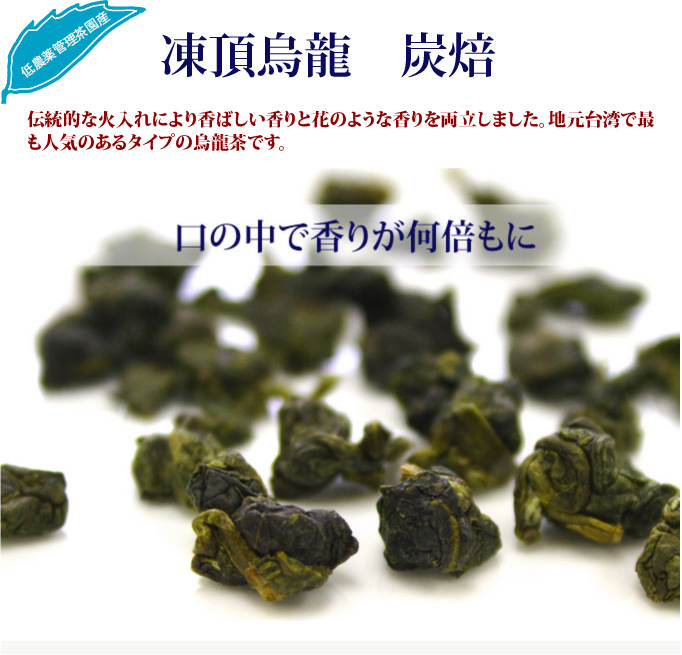
The aroma spreads many times in your mouth.
Dongding Oolong is one of the most popular types of local Taiwanese oolong tea.
Most Dongding Oolong tea in Taiwan is produced "outside of Dongdingshan", but HOJO's Dongding Oolong tea is made from tea grown in Dongdingshan, and even more so, from winter tea, which is considered the most luxurious type.
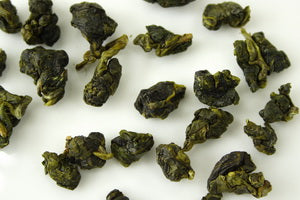
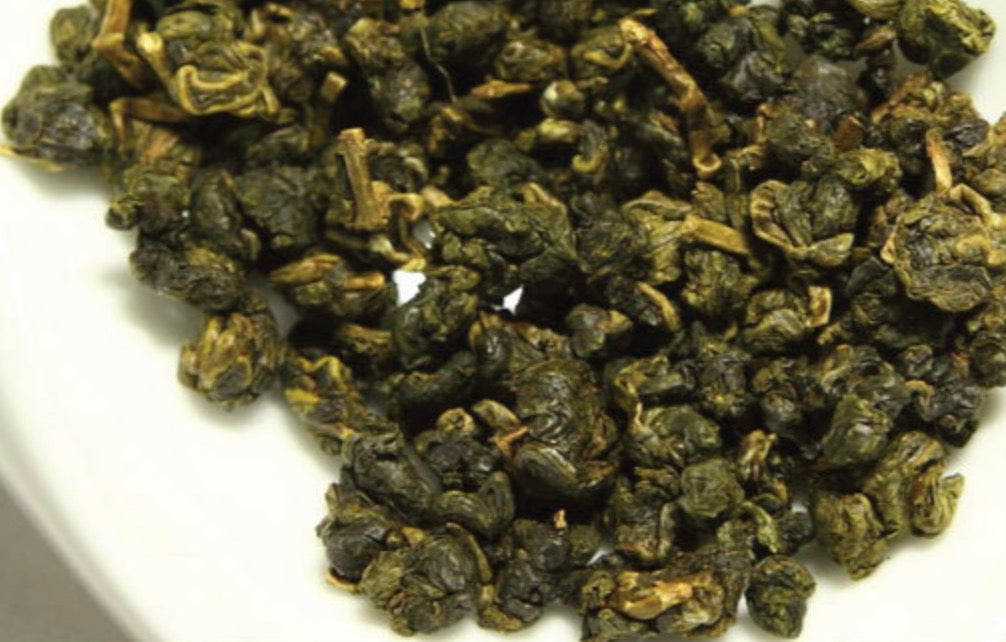
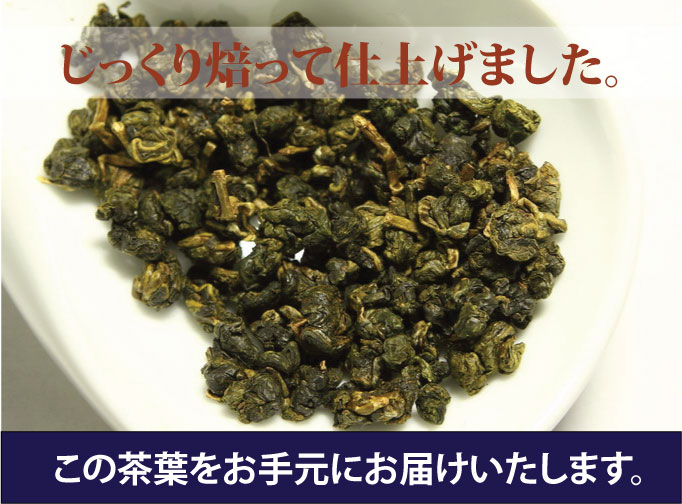
Dongding Oolong Charcoal Roasted is a traditional type that is slowly roasted over a fire. The traditional roasting method gives it both a fragrant and floral aroma.
This is especially recommended for those who like the slightly fragrant aroma of roasted green tea.
What are the signs of good Dongding Oolong tea?
It has no bitterness and is very sweet. You can make multiple cups of it, so it's surprisingly economical.
We have received many comments from customers who say that they were impressed by the soft, sweet aroma and rich flavor of the tea they brewed.
HOJO's Charcoal Roasted Dongding Oolong Tea can be brewed normally up to the 7th infusion, making it very economical. Charcoal Roasted Dongding Oolong Tea has a fragrant, mature taste, making it popular with men and the elderly.
The secret to its deliciousness is that it is "produced on Mount Dongding"
Most Dongding Oolong tea in Taiwan is produced "outside of Dongdingshan", but HOJO's Dongding Oolong tea is made from tea grown in Dongdingshan, and even more so, from winter tea, which is considered the most luxurious type.
It is very rare and therefore a little pricey.


Seven roasts is the norm for economic reasons
If you brew tea in a small teapot (200-250cc), you can enjoy the tea for more than seven infusions.
In other words, you can make 1 liter of tea from just a tablespoon of tea leaves. This is the economical advantage of using high-quality tea.
Relax with easy-to-drink tea
The savory flavor of charcoal roasted tea makes it perfect for any occasion. If you serve it after a Chinese meal, your friends will be delighted and it will add even more points to the meal.
Why not add the traditional "Dongding Oolong Charcoal Roasted" to your tea life?

History and Culture of Dongding Oolong Tea
Dongding is the name of a mountain in Lugu, Nantou County, Taiwan. The mountain trail is very slippery, and people climb to the summit by putting pressure on their toes (frozen feet), which is why it is said to have been called "Dongding."
It is said that about 150 years ago, oolong tea from Wuyi in Fujian Province, China began to be cultivated on Mount Dongding.
Originally, Dongding Oolong tea was the name given to oolong tea produced near Mount Dongding, but as its popularity grew, tea grown in other regions also began to be called by the same name.
In recent years, tea grown in low-lying areas has been roasted intensely to give it a fragrant aroma, and is exported overseas as Dongding Oolong tea.
Production area
The tea leaves are produced in Dongding Mountain in Nantou County, Taiwan. As the fame of Dongding Oolong Tea grows, ordinary high mountain tea is roasted and sold under the name Dongding Oolong Tea, instead of Dongding Mountain tea.
In fact, it is said that most of the Dongding Oolong tea sold on the market is not from Dongdingshan. At the same time, even within Taiwan, Dongding Oolong is becoming synonymous with tea, and Dongding Oolong tea from Dongdingshan is now extremely valuable.

Mount Dongding

[Mt. Dongding] Most of the afternoon is covered in fog.
However, at HOJO, we are committed to producing authentic Dongding Oolong tea, and we seek out tea from Dongdingshan. Dongdingshan is one of the most famous tea producing areas in Taiwan, and the secret to producing such a unique and delicious tea lies in its location.
Dongdingshan is not a high mountain, only about 1000m above sea level. The environment of Dongdingshan is not very suitable for tea in terms of sunlight, soil quality, and environment.
Tea leaves grown in the harsh environment of Mt. Dongding produce a mysteriously strong aroma and sweet taste. You can understand this by drinking our Dongding Oolong tea.


The sweet aroma and rich, high-quality Japanese tea-like taste are the result of tea grown in the Dongding Mountains of Lugu Township. The raw tea leaves are purchased from organic tea farms.
Cultivars and Harvesting
HOJO's Dongding Oolong tea is made from a variety called Qingxin Oolong. Tea made from this variety is characterized by a refreshing taste and an elegant aroma.

As you can see in the picture, the leaves are greenish yellow rather than lush and the plant is not in good condition, however these slow growing leaves produce delicious tea.

Blue Heart Oolong Tea Plantation

The tea leaves used to make Dongding Oolong tea are the "Qingxin Oolong" variety.
All tea picking is done by hand. Three to four tea leaves, including new buds, are picked by hand.
Tea leaves are picked in the spring, summer, autumn and winter, but the most high-quality tea leaves are produced from the spring and winter pickings. Tea picking takes place from November to December.
HOJO Dongding Oolong Tea is made only from spring or winter picked tea leaves, which are fresh and tender.
Charcoal roasting process for Dongding Oolong
The following steps are taken to produce charcoal-roasted Dongding Oolong.
- Nikko wilting
- Withering indoors - Fermentation
- Kneading
- Charcoal roasting
Each process is explained below.
Nikko wilting
After harvesting, the tea leaves are spread out on the ground in the sun to wilt. This is called sun wilting. Usually, withering is done on a slightly cloudy day to prevent the leaves from being damaged by sunlight.
If the weather is good and the sun is strong, the shade can be placed a few meters above the ground to soften the sunlight. By withering in the sun, the moisture in the tea leaves evaporates and fermentation begins slowly.
The tea leaves gradually soften and begin to release a refreshing aroma.
Withering indoors - Fermentation
The fermentation method for oolong tea is very different from that for black tea. After the tea leaves have completed the sun-withering process, they are brought inside and spread on sheets.
For tea leaves that are moist and high in moisture, thinning the layer of tea leaves will speed up the evaporation of moisture. Next, the tea leaves are spread out on a bamboo basket. Spreading them on the basket promotes fermentation, and then the leaves are lifted up again and dropped into the slanted basket, then left to ferment, and the process is repeated.
The leaves are then agitated in a bamboo drum, which causes the leaves to lift and fall, gradually damaging the edges and encouraging enzymatic fermentation.
Once fully fermented, the tea leaves will release a sweet, floral aroma. When processed by skilled craftsmen, the leaves will have a red color only on the edges.
This indicates that only the edges of the leaves are bruised and partially fermented, which is clearly different from lower quality leaves, which have an uneven red discolouration.
Once fermentation is complete, the tea leaves are heated to inactivate the enzymes and stop the fermentation. If the fermentation is not stopped in a timely manner, the fermentation of the tea leaves will continue and the tea will end up with a flavor similar to black tea.
The number of stirrings and the time for leaving the tea to sit are determined based on the moisture content, aroma, and color of the tea leaves.
This delicate timing is decided by the craftsmen's experience, and it greatly affects the quality of the oolong tea. The craftsmen work under the instructions of the "master".
The quality of the tea master greatly influences the aroma of the oolong tea. In order to consistently obtain high-quality tea, it is necessary to work with a superior master.
Kneading
At this point, the tea leaves already have an oolong flavor, but because the cells of the tea leaves are still intact except for the edges, the flavor and aroma will not be fully extracted even if you brew the tea in this state.
On the other hand, when the rolling process is carried out under high pressure, as in the production of black tea, ①unwanted impurities will dissolve into the tea.
②Furthermore, because the ingredients are exposed to excessive air, non-enzymatic oxidation (not involving enzymatic fermentation) occurs, causing changes in taste and aroma.
To solve these dilemmas, a method called "bao-mou" is used in the production of oolong tea. As the name suggests, bao-mou is the process of wrapping and then rolling the tea.
The tea leaves are placed into cloth bags while still warm and soft. Each bag can contain 10-20kg of tea leaves, which are then rolled into balls the size of basketballs.
Nowadays, the ends of the bags are twisted powerfully by a machine. By twisting them round and round, the bag is compressed and the tea leaves are tightly pressed.
Next, the balls of tea leaves are placed on a disk-shaped device. There are disks on the top and bottom, and the balls of tea leaves are sandwiched between two plates. The top disk is fixed and does not move, only the bottom disk rotates.
The ball containing the tea leaves is rolled while rotating. After rolling for a while, the tea leaves are gently heated again. If the tea leaves cool, they will harden and crack, so they are periodically heated to soften them.
The tea leaves gradually become firmer and are formed into a spherical shape. The higher the quality of the tea leaves, the firmer the leaves will be and the heavier they will feel.
High-quality tea leaves also have a glossy surface due to the solidification of the extract from the tea leaves. This series of steps is repeated many times.
The number of times, the method of rolling, and the method of heating vary depending on the condition of the tea leaves. For example, tea leaves harvested in tea plantations that are lacking in nutrients and water have a relatively low moisture content.
If these types of tea leaves are rolled in the same way, the moisture content will decrease and the leaves will crack, or the color will change when heated.
It is important to take into account the condition of the tea leaves, the weather of the day, and various other factors and adjust the conditions for the series of operations as appropriate; this is the skill of the "master."
After rolling, the tea leaves are dried in a dryer to reduce the moisture content to less than 5% and then the tea is ready to be used.
Charcoal roasting
As the name suggests, this is the process of roasting the tea leaves over charcoal. Roasting the tea leaves enhances their aroma and improves their shelf life.
When the tea leaves are heated, the main component, polyphenols, and their polymeric tannins are further oxidized, which produces volatile compounds. These volatile compounds are the main source of the aroma that is characteristic of charcoal roasted Dongding Oolong.
Choose options