
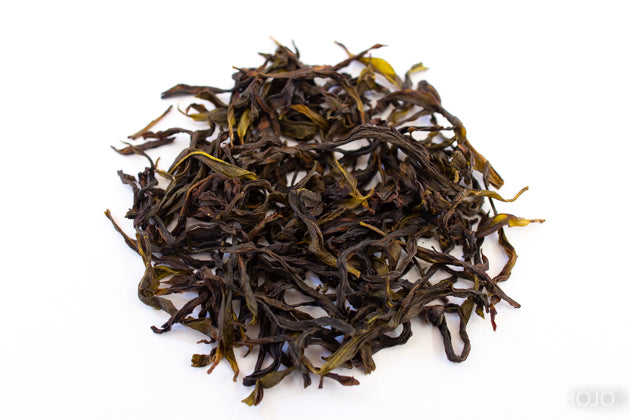
Phoenix Single Cong Siblings 2021 40g
The tea is produced in Fengxi Dongjiao Village, at an altitude of approximately 700m.  The origin of the name "Kyoudai" is that the mother tree of "Kyoudai" split into two trunks from the root. The family who owned the tree had two sons, and after each brother became independent, they inherited their own trunks and made tea together, hence the name "Kyoudai".
The defining feature of Kyoryu is its sweet berry aroma. It is a tea with a sweet, gentle aroma reminiscent of strawberries, mulberries, and raspberries, making it easy to understand and delicious.
Features of high-quality Phoenix single cone
High quality Fenghuang Dancong is cultivated using the "gaoshu" method, which means that the tea plant is allowed to grow large by spreading its branches without pruning the growing point, so that it grows like a mountain tree (see photo below).
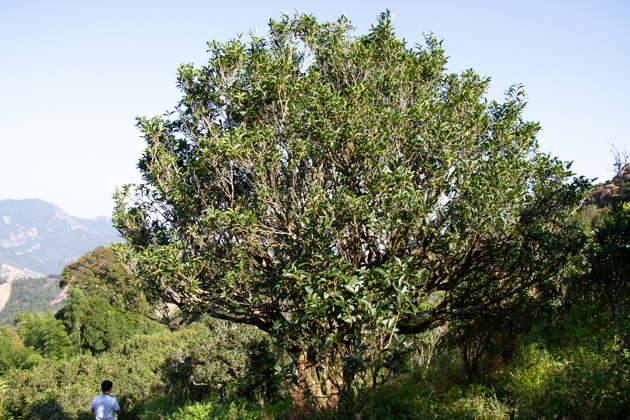
An old Houou Danso tree and me, Akira Kitajo (from behind)
On the other hand, in conventional tea gardens in Japan, Taiwan, India and Sri Lanka, tea plants are pruned low, making them more compact and easier to manage. Conventional tea gardens have densely packed tea plants, which are more efficient to harvest and produce more, which has economic advantages. However, tea plants grown in a natural growing environment using the high-tree method have better flavor and quality, although it is more laborious to harvest. In Fenghuang Township, where Fenghuang Dancong Oolong tea is produced, tea plants at high altitudes are managed using the high-tree method, while the surrounding areas at low altitudes are characterized by conventional tea garden methods.
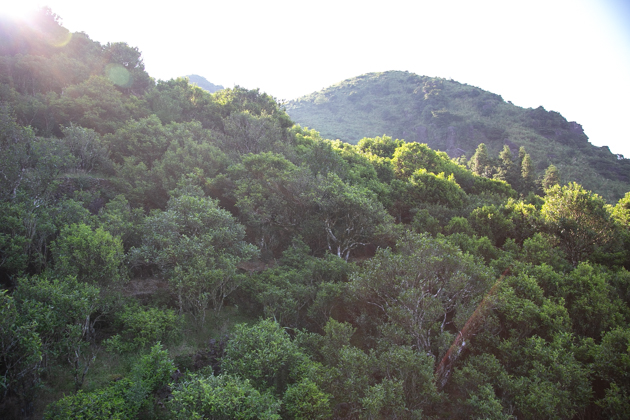
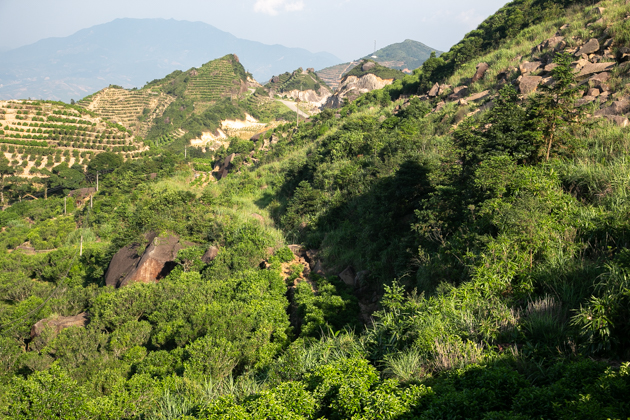
All highland tea trees are managed using the "gaoshu" method. Pictured is near Wujiang village.
What is a single plexus?
Fenghuang Single Cong Oolong Tea is produced around Wujiang Mountain in Fenghuang Town. Single cong refers to tea trees that are grouped according to their variety and aromatic characteristics and managed in small lots. In tea-related books, it is sometimes written that tea made from a single tree is called a single conglomerate, but this is no longer the case. Tea made from a single tree is called a "single plant." 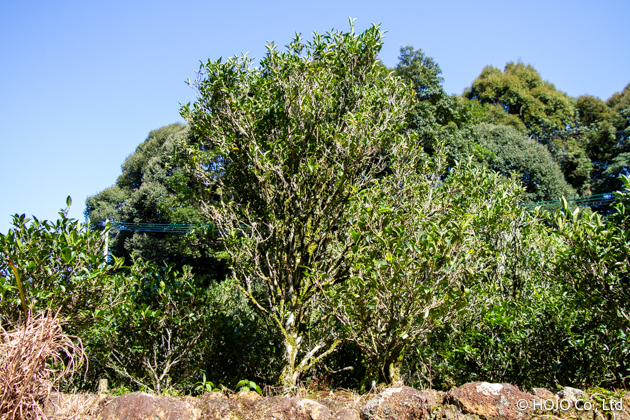
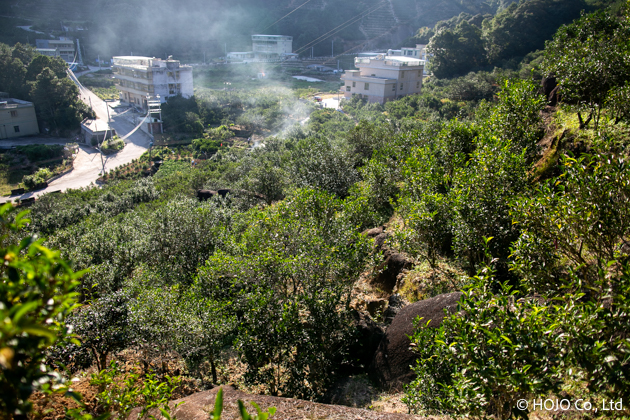 Fenghuang Dancong's fine tea is harvested not from low-pruned tea plants like those in Japanese and Taiwanese tea gardens, but from shrubs that grow independently like fruit trees. The producers are familiar with the characteristics of each plant, and group each plant based on its aroma for sale in micro lots, known as single conglomerates.
What is Lao Qing?
Among single-tree teas, teas with particularly long aging trees are called "Lao Kang". Single-tree tea made from a single tree is also listed as "Lao Kang Single-tree". Generally, the quality improves as the tree ages. Locally, the basic quality of Fenghuang single-tree tea is evaluated by the length of the aftertaste and the strength of the aftertaste. In addition, the overall value of the product is determined by the degree of aroma produced by the tea processing and finishing process. 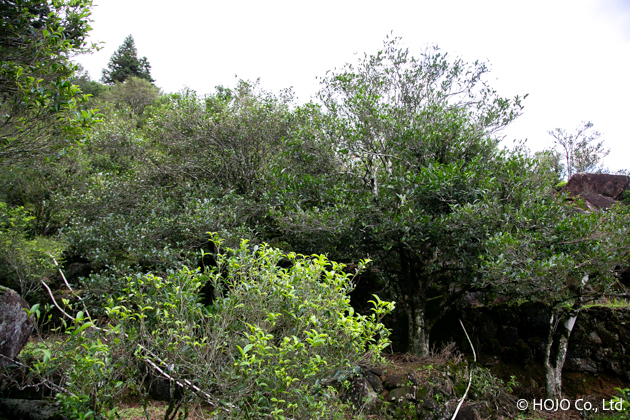
Altitude is very important when talking about quality
In the case of Phoenix Single Cong and Pu-erh tea, the age of the trees tends to be the focus of attention, but altitude is an equally important quality factor. This is true for all types of tea and all tea producing regions. Usually, an altitude of 600m or higher is the turning point for quality. At altitudes below that, there are many mass-produced tea plantations and tea plantations made up of young trees, and the tea is generally traded as cheap tea. In particular, tea plantations at altitudes of over 1000m have a large difference in temperature between day and night, and are a treasure trove of tea with a rich flavor and rich aroma.
Some people have the impression that Fenghuang Dancong has a bitter or astringent taste, but such teas are often made using standard tea plantation methods, with a lot of fertilizer and high temperatures during sterilization and roasting. Furthermore, in highland areas, only spring tea is usually harvested, whereas in standard tea plantations in lowland areas, tea is often harvested in spring, summer, or autumn for commercial production, which causes the bitterness.
On the other hand, high-quality Phoenix Single Cong tea grown at high altitudes using the high-altitude tree method has almost no bitterness or astringency even when brewed with boiling water.
Choose options