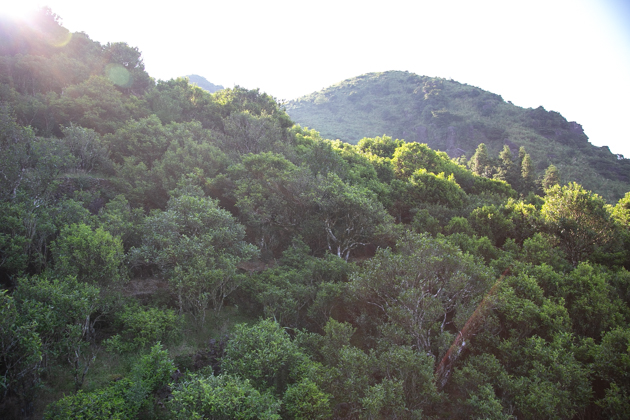
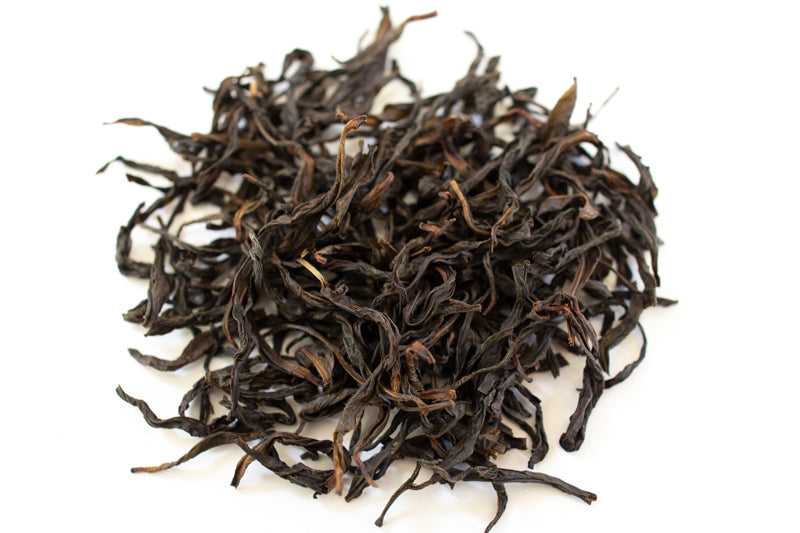
Baxian is a tea with a distinctive fragrance, and is a very popular variety among the Phoenix Single Cong teas.
Generally, Baxian is a relatively expensive tea, but in 2021, I was able to get Baxian at a very reasonable price.
This tea has the aroma of lilies, dried raspberries, and a hint of lychee. It is produced in Fengxi Dongjiao Village, at an altitude of 600-700m.
Characteristics of high-quality Phoenix single cone
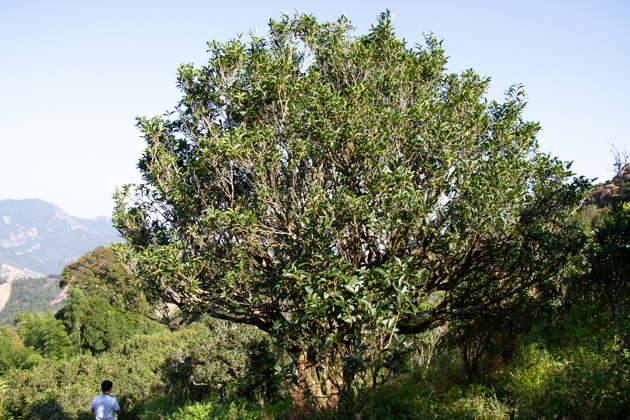
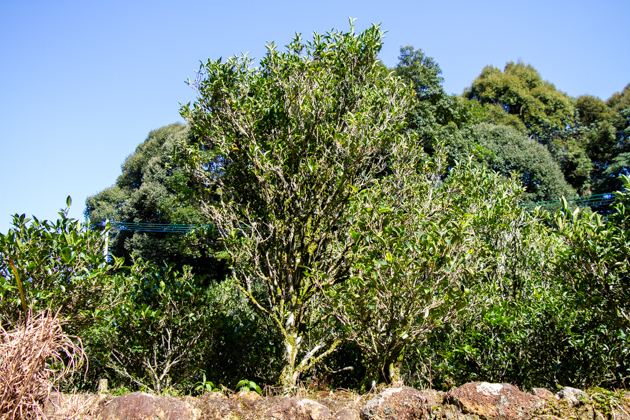
High-quality Fenghuang Dancong is cultivated in a style called 'gaob'. Gaob is a cultivation method in which the tea plant grows large, spreading its branches like a mountain tree, without pruning the growing point. Gaob refers to tea plants that are allowed to grow naturally without pruning. (See the photo below)
An old tea tree from Houou Danshun and me, Akira Kitajo (from behind)
On the other hand, tea trees in conventional tea gardens such as Japan, Taiwan, India, and Sri Lanka are pruned low and have a more compact and controlled form. In conventional tea gardens, tea trees are densely packed, allowing for efficient harvesting, and there are economic advantages in terms of production volume. On the other hand, tall tea trees grow in a natural growing environment and require a lot of effort to harvest the tea leaves, but the flavor and quality of the tall tea tree form is superior.
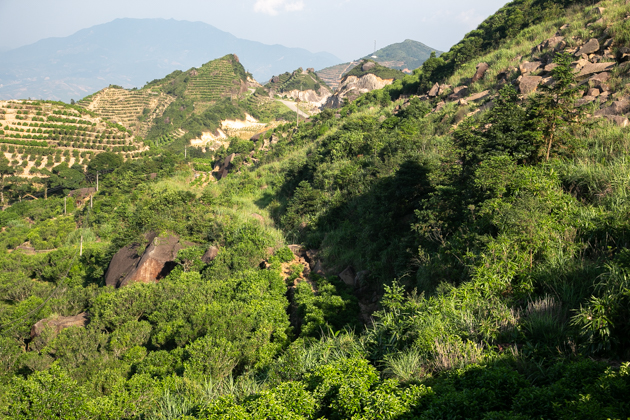
If you go to Phoenix Town, where Phoenix Single Cong Oolong Tea is produced, you will see that the tea trees in the high altitude areas are managed using the high tree method. On the other hand, in the lower altitude areas, including the surrounding areas, tea plantations are managed using the general tea plantation method.
The tea trees in the high altitude areas are all tall trees. The photo is from the area around Wujia Village.
Some people think that Fenghuang Dancong has an astringent or bitter taste, but this is due in part to the fact that this type of tea is grown using a lot of fertilizer in general tea plantations in lowlands, and that the killing and roasting temperatures are high. Also, in high altitude areas, tea is basically only harvested in the spring, but in lowland general tea plantations, which are grown on a more commercial basis, it is not uncommon for tea to be harvested in the spring, summer, or autumn, and these types of tea can sometimes be the cause of the astringent taste.
On the other hand, high-quality Houou Danshi tea grown at high altitudes has almost no bitterness or astringency even when brewed with hot water.

 On the other hand, tea trees in conventional tea gardens such as Japan, Taiwan, India, and Sri Lanka are pruned low and have a more compact and controlled form. In conventional tea gardens, tea trees are densely packed, allowing for efficient harvesting, and there are economic advantages in terms of production volume. On the other hand, tall tea trees grow in a natural growing environment and require a lot of effort to harvest the tea leaves, but the flavor and quality of the tall tea tree form is superior.
If you go to Phoenix Town, where Phoenix Single Cong Oolong Tea is produced, you will see that the tea trees in the high altitude areas are managed using the high tree method. On the other hand, in the lower altitude areas, including the surrounding areas, tea plantations are managed using the general tea plantation method.
On the other hand, tea trees in conventional tea gardens such as Japan, Taiwan, India, and Sri Lanka are pruned low and have a more compact and controlled form. In conventional tea gardens, tea trees are densely packed, allowing for efficient harvesting, and there are economic advantages in terms of production volume. On the other hand, tall tea trees grow in a natural growing environment and require a lot of effort to harvest the tea leaves, but the flavor and quality of the tall tea tree form is superior.
If you go to Phoenix Town, where Phoenix Single Cong Oolong Tea is produced, you will see that the tea trees in the high altitude areas are managed using the high tree method. On the other hand, in the lower altitude areas, including the surrounding areas, tea plantations are managed using the general tea plantation method.