
Wooden fence iron guanyin 100g
Tea made using traditional methods
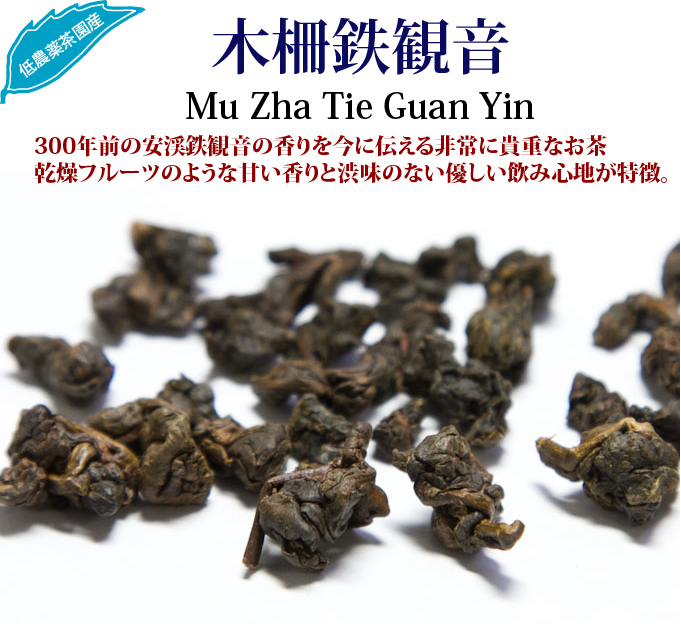
Muzha Tieguanyin is a very precious tea that conveys the aroma of Anxi Tieguanyin from 300 years ago, a tea that has already disappeared in China.
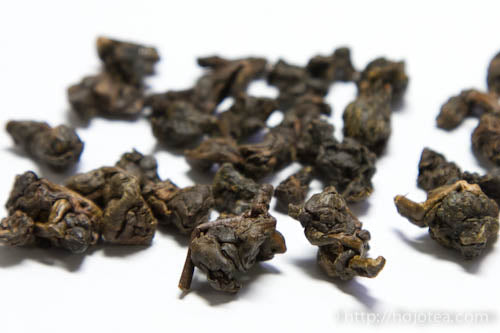
The tea leaves are slowly roasted over a long period of time, giving them a sweet aroma reminiscent of dried fruit and a gentle, non-astringent taste.
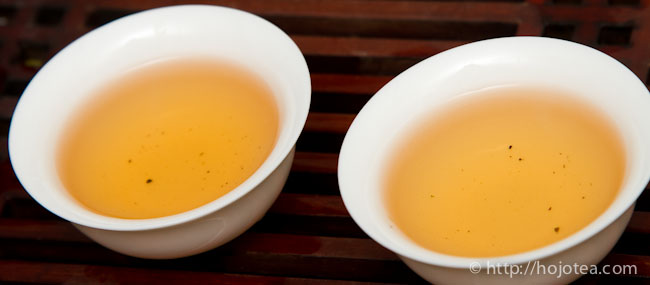
The tea has an amber color and goes very well with meals and desserts.
Product Details
Tieguanyin is one of China's most famous oolong teas and is produced in Anxi, Fujian Province.
Oolong tea was not produced in Anxi until around the 16th century, and it is recorded that the tea-making techniques were transmitted from Wuyi Oolong.
Wuyi Oolong is characterized by its long roasting time, which is why Anxi Tieguanyin was roasted with great care 300 years ago.
Anxi Tieguanyin was developed following the methods used to make Wuyi Oolong, but in modern times it has evolved in its own unique way.
As a result of pursuing an orchid-like and fruity scent, it has evolved into a tea that is now green in color, similar to green tea.
Meanwhile, Taiwanese Tieguanyin developed 300 years ago with the introduction of techniques from Anxi, and the mainstream at the time was the traditional heavy-fire Tieguanyin.
When Tieguanyin was brought to Taiwan, it became like a Galapagos island, and the way it was made 300 years ago has been passed down to the present day.
For this reason, Taiwan's Muzha Tieguanyin can be said to be a precious tea that continues the ancient Tieguanyin production method to the present day.
Muzha Tieguanyin is amber in color and has a sweet aroma reminiscent of dried fruit and a rich, sweet aftertaste that spreads in the mouth.
History of Muzha Iron Guanyin
Muzha Tie Guan Yin originates from Wenshan District, Taipei City, in the north of Taiwan. According to records, tea was first planted in the north of Taiwan 300 years ago.
During the Qing Dynasty, between 1796 and 1820, a tea merchant named Ke Chao from Wuyishan, Fujian Province, is said to have brought tea trees to Taiwan and planted them in the Wenshan area in northern Taiwan.
Wenshan is not only famous for its tea production, but also the birthplace of Taiwanese tea. About 200 years ago, Tieguanyin tea was brought from Anxi, Fujian Province, and planted in a place called Muzha in Wenshan.
Tieguanyin tea was first planted in Zhanghushan, and later two brothers from the Zhang family, Zhang Nei Miao and Zhang Nei Qian, brought large quantities of Tieguanyin tea from Anxi and began large-scale production in Muzha.

Taipei city as seen from the Muzha area

Tea plantations in the Muzha area


Choose options