
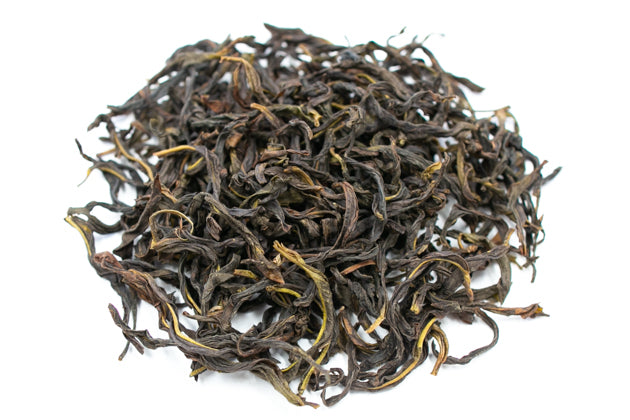
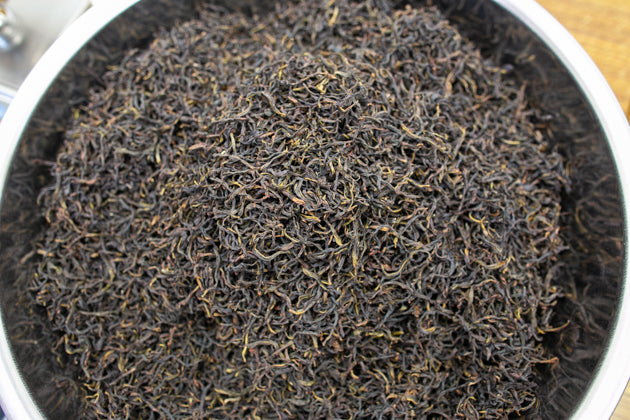
Phoenix monoplex Lao Qin Jiang Huaxiang 2022 40g
This tea was made in Wujiang Guizhuhu Village (near Tianchi Lake in the Wujiang Mountains) from tea trees that are around 60 years old and located at an altitude of 1,200m.

Old Ginger Fragrance 2022 Tea Tree
Among the Phoenix Dancong teas, Mi Lan Xiang is one of the most representative teas with a strong aroma, but Jiang Hua Xiang is also a very strong-smelling tea. However, the type of aroma is completely different from Mi Lan Xiang. Jiang Hua Xiang has a strong top note with a good spiciness, and is a very gorgeous-smelling tea. 
When describing the scent of jiang hua xiang, it is often described locally as a tea that smells like ginger flowers. Unfortunately, in Japan, there are few opportunities to experience the scent of ginger flowers, so the term "ginger flowers" may not ring a bell. However, when I smell ginger flowers on business trips to Taiwan or China, I am surprised at how similar it is to the scent of jiang hua xiang. If I were to describe the scent of Japanese flowers, I think it would be similar to the scent of daffodils or lilies. I can also detect a peach-like scent like plums and nectarines.
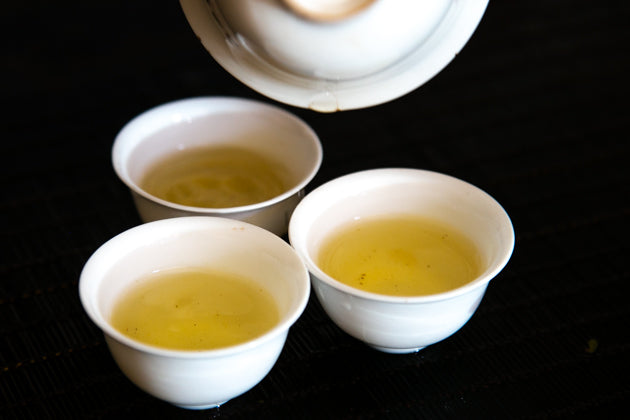
As the name Lao Kung suggests, the excellent quality of the ingredients is apparent when brewing this tea. It has a long, sweet aftertaste, a lingering aroma, and a very soft taste.
Characteristics of high-quality Phoenix single cone
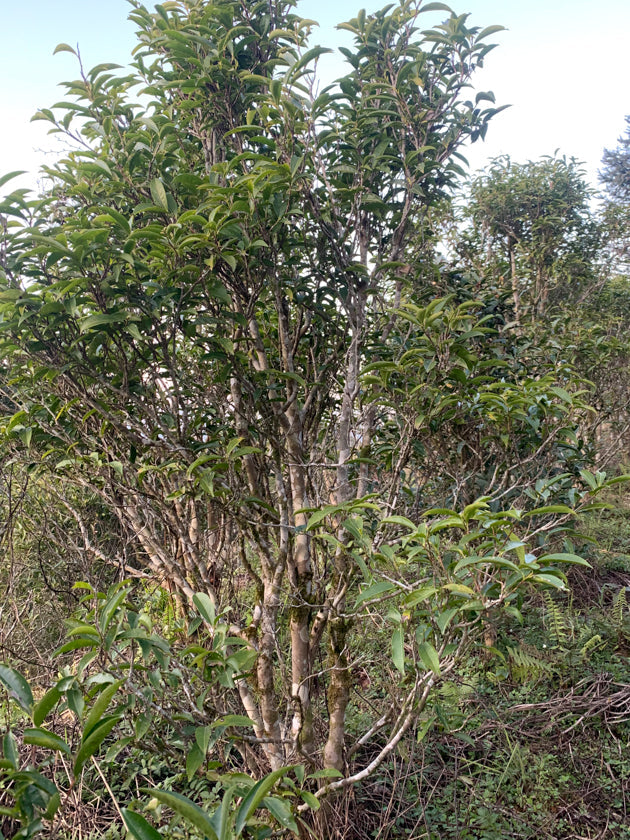
High-quality Fenghuang Dancong is cultivated in a style called 'taibo', which means that the tea plant is not pruned at the growing point, allowing the branches to spread out like a mountain tree and grow large (see the photo below).

An old tea tree from Houou Dancong and me, Kitajo (from behind)

On the other hand, tea trees in conventional tea farms, such as those in Japan, Taiwan, India, and Sri Lanka, are pruned low and have a more compact and controlled form. In conventional tea farms, tea trees are densely packed, allowing for efficient harvesting, and there are economic advantages in terms of high production volume. On the other hand, tall tea trees grow in a natural growing environment, and although it takes a lot of effort to harvest the tea leaves, the tall tree style has better flavor and quality.
If you go to Fenghuang Town, where Fenghuang Dancong Oolong tea is produced, you will see that the tea trees in the high altitude areas are managed using the high tree method. On the other hand, in the lower altitude areas, including the surrounding areas, tea plantations are managed using the general tea plantation method.


The tea trees in the high altitude areas are all tall trees. The photo is from the area around Wujia Village.
Some people think that Fenghuang Dancong has an astringent or bitter taste, but this is due in part to the fact that this type of tea is grown using a lot of fertilizer in general tea plantations in lowlands, and that the killing and roasting temperatures are high. Also, in high altitude areas, tea is basically only harvested in the spring, but in lowland general tea plantations, which are grown on a more commercial basis, it is not uncommon for tea to be harvested in the spring, summer, or autumn, and these types of tea can sometimes be the cause of the astringent taste.
On the other hand, high-quality Phoenix Dancong tea grown at high altitudes has almost no bitterness or astringency even when brewed with hot water.
Choose options