
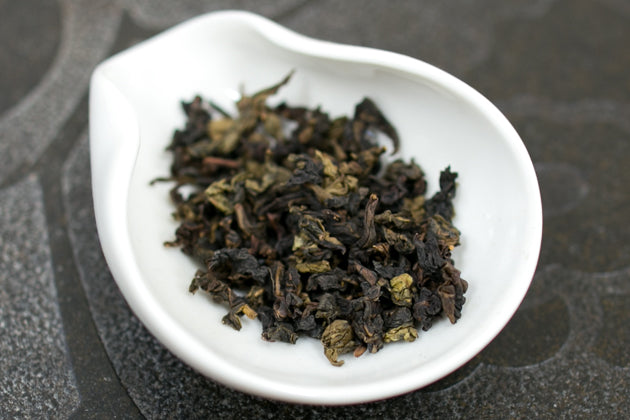
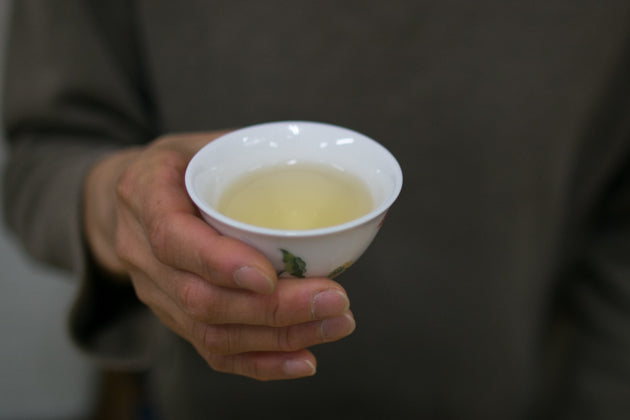
Iron ginseng medium roasting 70g
We have launched medium-roasted Tieguanyin from Anxi, China. We were unable to find a product that met both the quality and Japanese pesticide standards, and for many years we were unable to sell Tieguanyin at an affordable price. However, by visiting Anxi many times in the past, we were able to meet a producer who thoroughly manages pesticides, and we were finally able to launch the product.
The name Tieguanyin is the name of a tea
Tieguanyin is a very famous tea, so I'm sure many people have heard of it at least once. Tieguanyin is not the name of a tea brewing method, but a tea made from a variety of tea called Tieguanyin. Just like there are many varieties of apples, such as Fuji, Kougyoku, and Orin, there are many varieties of tea, and Tieguanyin is one of them. The characteristic of Tieguanyin is that it grows slower than other varieties, which is why it has a strong aftertaste and a long lingering aftertaste. Another characteristic is that it is semi-fermented, which gives it an orchid-like scent.
Oolong tea spread to Wuyishan, Anxi, and Taiwan
Anxi is a county located in the north of Xiamen and is one of China's three major oolong tea producing areas, along with Fenghuang Town and Wuyishan.
According to the "Tea Theory" written by Wang Zi, the magistrate of Chong'an County in 1706, "As the popularity of Wuyishan oolong tea increased, the manufacturing method of Wuyishan oolong tea was imitated in Anxi." However, another historical fact is that people from Anxi were engaged in tea making in Wuyishan, and it is thought that they returned to their hometown of Anxi and started making oolong tea. As evidence of this, some tea producers in Wuyishan speak Minnan, a dialect of Anxi.
After the oolong tea production method was introduced to Anxi, Anxi tea evolved in its own way, including the development of original processing methods such as bao-rolling (a method of rolling tea leaves into granular form). Today, Anxi is a very popular oolong tea producing area both inside and outside of China.
Anxi is also one of the hometowns of overseas Chinese in Southeast Asia, and many Taiwanese people are from Anxi, Quanzhou, and Xiamen. Historically, the tea-making traditions of Anxi were introduced to Taiwan by the immigrants from the Minnan region, and became the basis of modern Taiwanese oolong tea.
Good Tieguanyin tea comes from tea plantations at high altitudes
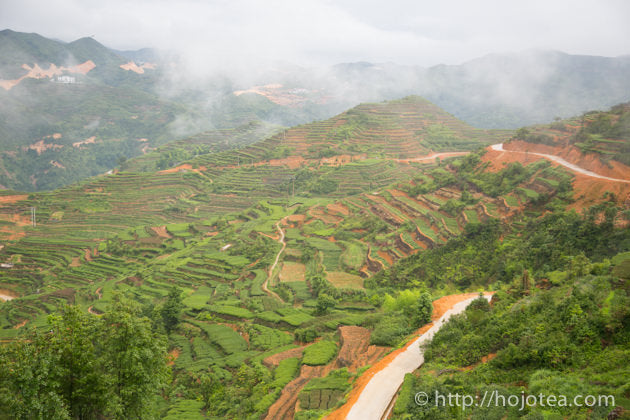
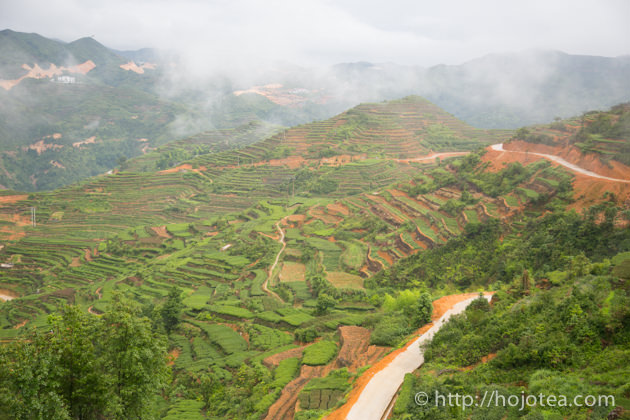
Like other teas, the higher the altitude, the better the quality of Tieguanyin tea. When it comes to altitude, Darjeeling and Taiwanese high mountain teas tend to get attention, but in fact, altitude is a very important factor that determines the quality of all kinds of tea. As the altitude increases, the aftertaste becomes longer and the bitterness decreases. In addition, the quality of the aroma improves, and the aroma simply feels stronger. The Tieguanyin Medium Roasted Tea introduced this time is made in Daping Village, Anxi County, Quanzhou City, Fujian Province, China. The tea plantation is located at an altitude of 1000m-1300m.
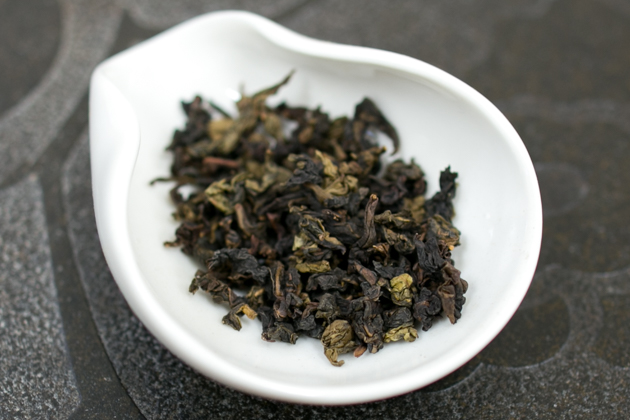
Medium heat for a perfect balance between the aroma and flavor of orchid flowers
Medium roasting is the name given to the tea finishing method in which tea is roasted to a medium degree. Although the light-scented Tieguanyin is also famous, I think the medium roasting style is the most popular in China. Medium roasting Tieguanyin has both a floral orchid-like aroma and a fragrant taste, making it a tea that is popular with everyone. It is recommended for various occasions, such as before, during, and after meals.
Choose options