
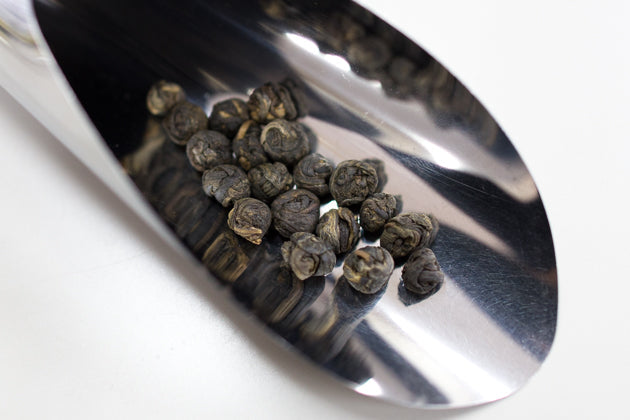
Pu'er Jasmine Pearl 100g
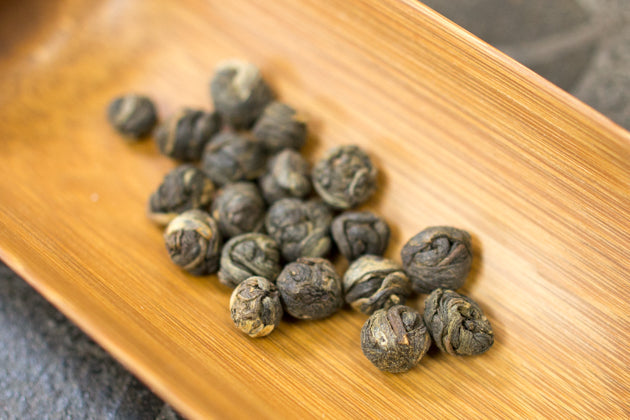
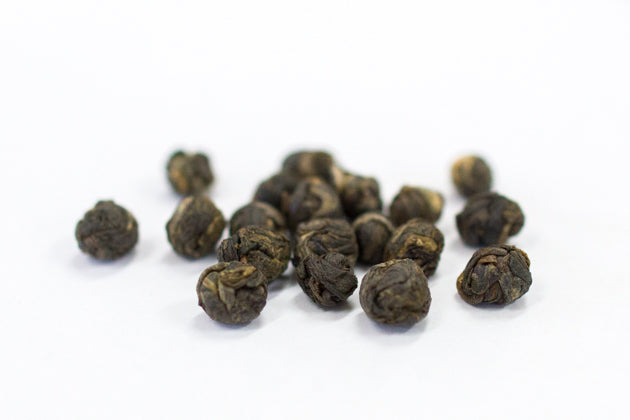
Pu-erh Jasmine Dragon Pearl is a rare jasmine tea made from naturally grown raw Pu-erh tea.
The base tea used this time is Pu-erh raw tea, which is of such high quality that it would not be inferior if it were sold as part of HOJO's Pu-erh raw tea lineup.
By using raw Pu-erh tea, we have achieved a deep richness that cannot be achieved with ordinary tea leaves. By mixing it with Guangxi jasmine flowers, we have created a jasmine tea with a very strong flavor, mellow taste, and a clear fragrance.
Product Details
For more details on the development of this tea, please see the column below.
Why do we need to make jasmine tea using Pu-erh tea?
The reason we made jasmine tea using raw Pu-erh tea is to achieve a level of deep richness that can never be achieved with ordinary tea leaves.
The strong flavor is also reflected in the aroma, with the scent of jasmine being absorbed into your chest.

The Pu-erh raw tea used in this production is of such high quality that it would be comparable to other products sold as part of HOJO's standard Pu-erh raw tea lineup.
This tea is made using completely natural cultivation methods in a village located about a 12-hour drive from Lincang city, right next to the border with Myanmar, in other words, right next to the area famous for the Golden Triangle of Drugs.
This region has almost no roads or other infrastructure, so it is necessary to use jeeps and tractors to visit the villages of the Lahu people, who are the producers.
What is characteristic of these regions is that they have very little rain and the mountains are very dry, and on the mountains there are only a few tea trees that were planted by their ancestors hundreds of years ago.
As part of the traditions of these ethnic minority groups, they do not use pesticides or fertilizers, and they leave the weeds growing around the tea plants and the tea trees unattended. They only cut the grass at the time of harvest, and after the harvest, the tea is left to its own devices for another year.
For more information on natural cultivation, please see Golden Tea.
They say they have been growing tea this way for over 1000 years.
Tea grown in these conditions grows very slowly and each plant produces very few leaves, so the tea leaves contain high concentrations of minerals.
The quality of this tea leaves is said to be among the best in all of China, but because we are located deep in the mountains we were able to obtain the tea leaves at a reasonable price and create a jasmine tea with a strong, full-bodied flavor not found in ordinary tea.


Pu-erh raw tea is similar to white and green teas
When I say I made jasmine tea using Pu-erh tea, people sometimes misunderstand and ask, "You made jasmine tea using tea that's brown and smells like old furniture?"
The brown tea commonly sold in Japan is called ripe pu-erh tea, which is made by microbial fermentation.
Matured tea was developed in the 1970s and has a history of about 40 years.
In contrast, raw Pu-erh tea is killed in the same way as green tea and then dried in the sun. During this process, any remaining enzymes are activated, turning the tea into a semi-fermented tea.
In other words, from the standpoint of manufacturing, it is very close to white tea, green tea, or Taiwanese oolong tea.


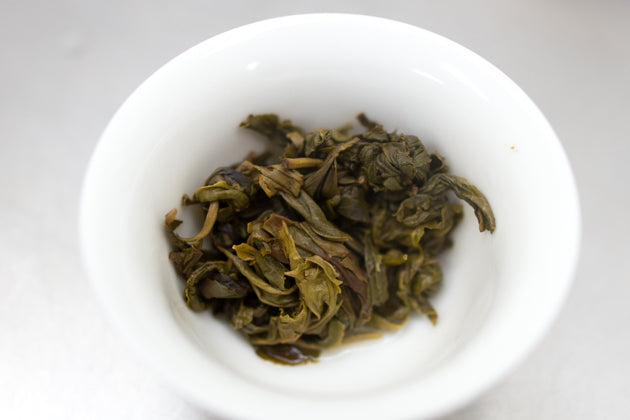
Pu-erh raw tea leaves are green
Enjoy the mineral flavor that you can't get from regular tea.
In Yunnan, it is said that the higher the quality of the tea, the softer the flavor and the warmer it is for the body. In fact, when you drink Pu-erh Jasmine Tea, your face will turn red and your body will warm up instantly.
This is because blood is circulating throughout the body, including the face, and depending on how much you drink, you may feel too relaxed and get tea drunk.
Being tea drunk is a sensation similar to being tipsy from alcohol, caused by lowering blood pressure and improving blood circulation.
For details on the manufacturing process, please refer to the column on how to make jasmine tea.


Choose options